Original Medicare vs Medicare Advantage: Costs, Pros and Cons for 2027
Original Medicare vs Medicare Advantage compared for 2027: networks, prior authorization, the $9,850 out-of-pocket cap, Medigap rules, extra benefits and how to choose.

Table of contents

Original Medicare gives you the freedom to see almost any doctor in the country, but on its own it has no cap on what you pay. Medicare Advantage usually costs less up front and adds extras, but it uses networks and prior authorization and can cost up to $9,850 a year in-network in 2027. Neither is better for everyone. The right choice depends on your doctors, your health, where you spend your time and how much risk you can afford.
We are an independent site and are not affiliated with Medicare, CMS or any insurer, and we do not sell plans. Figures below are attributed to CMS, Medicare.gov and KFF. Worked examples are labelled illustrative.
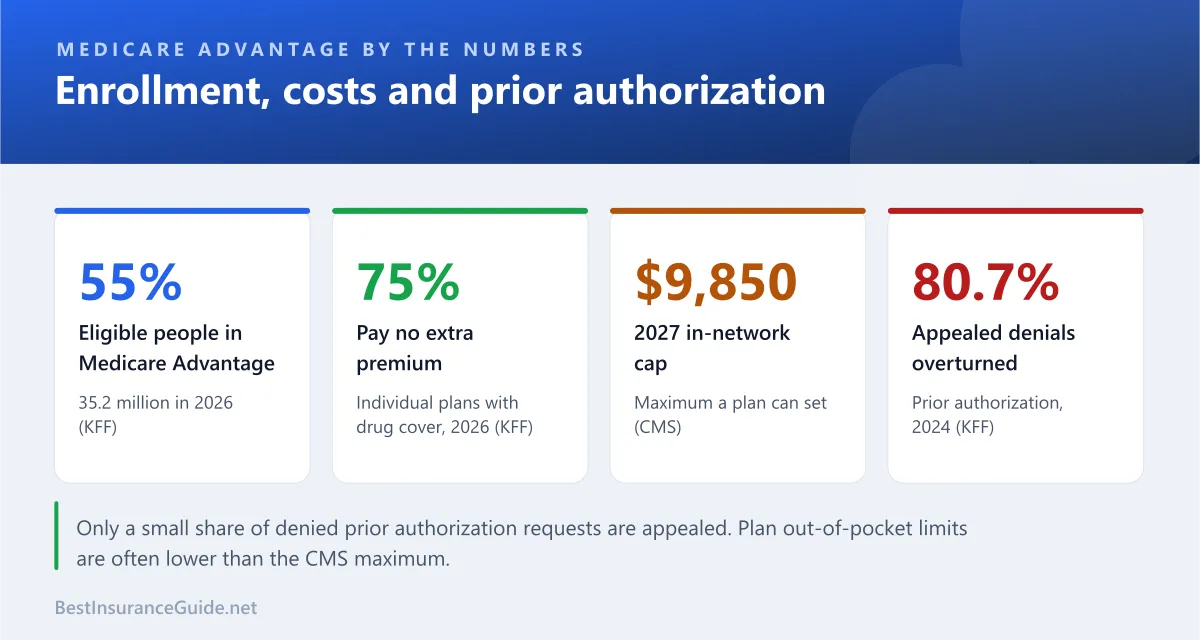
The choice matters right now: Medicare open enrollment runs from October 15 to December 7, 2026, and any change takes effect on January 1, 2027. According to KFF, 55% of eligible people, about 35.2 million, were in Medicare Advantage in 2026.
Original Medicare vs Medicare Advantage at a glance
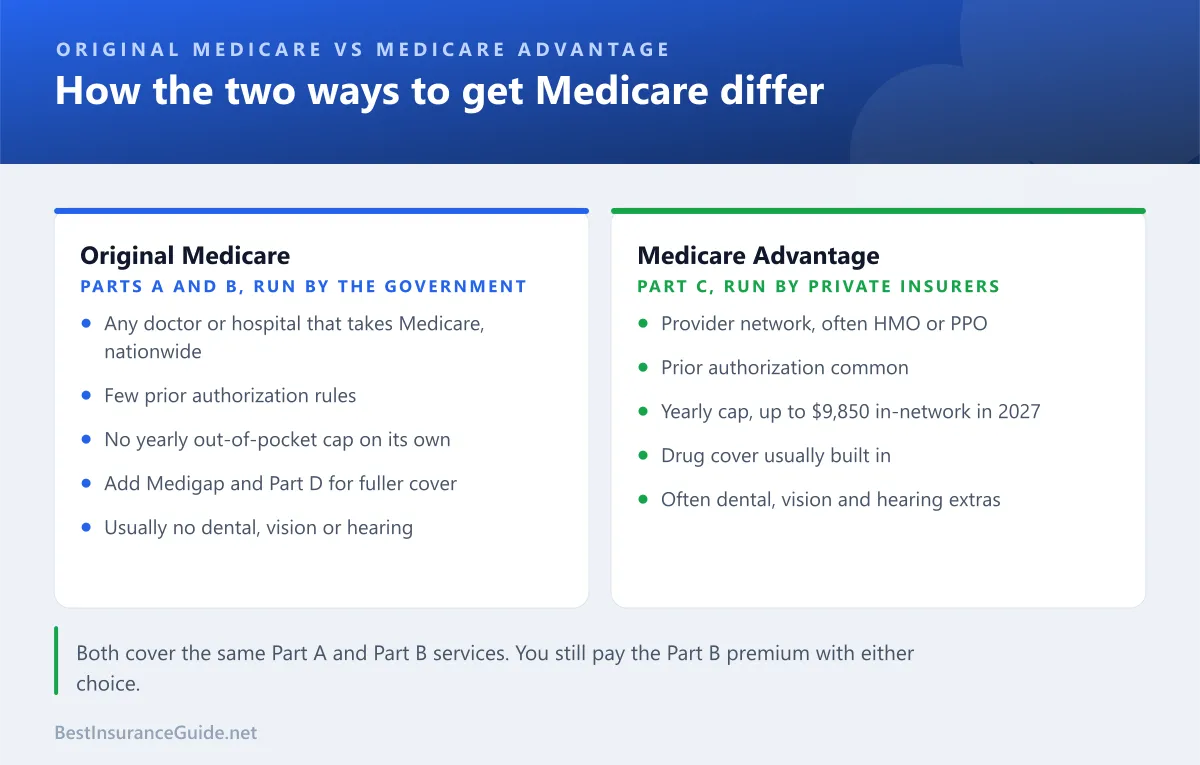
| Original Medicare | Medicare Advantage | |
|---|---|---|
| Run by | The federal government | Private insurers approved by Medicare |
| Doctors and hospitals | Any provider that accepts Medicare, nationwide | Plan network; out-of-network care costs more or is not covered |
| Referrals and prior authorization | Rarely needed | Common |
| Yearly out-of-pocket limit | None without Medigap | Up to $9,850 in-network in 2027 ($14,800 combined for PPOs) |
| Drug coverage | Separate Part D plan | Usually included |
| Dental, vision, hearing | Generally not covered | Usually some cover |
| Monthly cost beyond Part B | Medigap and Part D premiums | Often $0 |
| Travel | Works anywhere in the U.S. | Usually emergency and urgent care only outside the area |
| Can change every year? | Yes, but Medigap may need underwriting | Yes, and plans themselves change every year |
How Original Medicare works
Original Medicare is Part A (hospital insurance) and Part B (medical insurance). You can see any doctor, hospital or provider in the U.S. that accepts Medicare, usually without a referral.
What you pay in 2026, according to CMS:
- Part B premium: $202.90 a month for most people. The 2026 Medicare Trustees Report projects $209.50 for 2027.
- Part B deductible: $283 a year, then usually 20% coinsurance with no annual limit.
- Part A deductible: $1,736 for each hospital benefit period.
The big gap is the lack of a cap. A cancer treatment, a long hospital stay or a major surgery can leave you paying 20% of very large bills. That is why most people on Original Medicare add:
- A Medigap (Medicare Supplement) policy, which pays most or all of the deductibles and coinsurance. Plan G is the most popular; our guide to Medigap Plan G vs Plan N compares the two leading plans. KFF reports that the average Plan G premium was $194 a month in 2026.
- A Part D drug plan, since Original Medicare does not cover most prescriptions. See Medicare Part D 2027.
Some people get the gap covered another way, through retiree coverage, Medicaid or TRICARE For Life.
How Medicare Advantage works
Medicare Advantage, also called Part C, is an alternative way to get your Medicare benefits through a private insurer approved by Medicare. The plan must cover everything Original Medicare covers, except hospice care, which Original Medicare still pays for.
Most plans:
- use a network, usually as an HMO (you generally need in-network care and referrals) or a PPO (you can go out of network, at a higher cost). Our guide to HMO vs PPO explains the difference;
- include Part D drug coverage;
- add dental, vision and hearing benefits and sometimes allowances for over-the-counter items or gym memberships;
- charge copays instead of 20% coinsurance;
- have a yearly out-of-pocket limit for covered medical care.
You still pay the Part B premium. KFF found that 75% of people in individual Medicare Advantage plans with drug coverage paid no extra premium in 2026, and nearly a third of plans offered some reduction in the Part B premium as a benefit.
The out-of-pocket limit for 2027
CMS sets the highest limit a plan can use. For 2027:
- $9,850 for in-network services, up from $9,250 in 2026.
- $14,800 for in-network and out-of-network services combined in PPO plans, up from $13,900.
Many plans set lower limits. The limit does not include premiums or Part D drug costs, which have their own $2,400 cap in 2027.
The downsides of Medicare Advantage
“Why are Medicare Advantage plans bad?” is one of the most common Medicare searches. These are the main criticisms, and they are real trade-offs rather than reasons to avoid every plan:
- Networks. If your doctor or hospital is not in the network, you may pay much more or nothing will be covered. Networks can change during the year and every January.
- Prior authorization. Most plans require advance approval for some services, such as hospital stays, skilled nursing, scans and some drugs. KFF found Medicare Advantage insurers received nearly 53 million prior authorization requests in 2024 and denied 4.1 million (7.7%) in full or in part, up from 6.4% in 2023. Only 11.5% of denials were appealed, but 80.7% of those appeals were fully or partly successful.
- Costs in a bad year. A $0-premium plan with a high out-of-pocket limit can cost thousands in a year with a hospital stay or cancer treatment.
- Getting back to Medigap. If you leave Medicare Advantage later, insurers in most states can use your health history to refuse a Medigap policy or charge more, except in guaranteed-issue situations.
- Plans change or leave. Benefits, drug lists and networks change each year, and some plans leave counties entirely. For 2027, several insurers are cutting plans; see Medicare Advantage plans leaving in 2027.
- Travel. Most HMO plans cover only emergency and urgent care outside the service area, which matters if you spend winters in another state.
The downsides of Original Medicare
Original Medicare has its own drawbacks:
- No out-of-pocket cap unless you add Medigap or have other coverage.
- Higher monthly costs. Medigap and Part D premiums together often cost several hundred dollars a month, and Medigap premiums usually rise with age in many states.
- Several separate pieces. Part B, Medigap and Part D mean three bills and three sets of rules.
- Few extras. Routine dental care, eye exams, glasses and hearing aids are generally not covered. Our guide to dental insurance for seniors on Medicare covers the options. If you are weighing Medicare Advantage for its extras, see what Medicare Advantage dental really covers.
- Some prior authorization now. Since January 2026, a Medicare pilot called WISeR requires advance approval for a short list of services, such as certain nerve stimulators and knee procedures, in Arizona, New Jersey, Ohio, Oklahoma, Texas and Washington.
What each costs: two illustrative years
Illustrative. Compare two people with the same 2026 Part B premium. One has Original Medicare with Medigap Plan G at the KFF average of $194 a month and a stand-alone Part D plan at about $36 a month. The other has a $0-premium Medicare Advantage plan with drug coverage and a $6,000 in-network out-of-pocket limit. Part B premiums are left out because both pay them, and drug costs are left out because they depend on your prescriptions.
| Original Medicare + Plan G + Part D | Medicare Advantage ($0 premium) | |
|---|---|---|
| Premiums for the year | $2,328 + $432 = $2,760 | $0 |
| Healthy year: a few doctor visits and tests | $283 Part B deductible = $283 | about $400 in copays |
| Total, healthy year | $3,043 | about $400 |
| Bad year: hospital stay, surgery and rehab | $283 Part B deductible = $283 | up to the $6,000 limit |
| Total, bad year | $3,043 | up to $6,000 |
What the example shows. Medicare Advantage wins clearly in a healthy year. In a very bad year, Original Medicare with Plan G is more predictable and you can use any provider that accepts Medicare, but you pay a high premium every year whether or not you need care. With a plan near the 2027 maximum of $9,850, the bad-year gap would be much wider.
Switching later: the Medigap catch
You can move between Original Medicare and Medicare Advantage every year during open enrollment, and Medicare Advantage members get another chance from January 1 to March 31. Our guide to Medicare open enrollment covers both windows.
Medicare coverage is easy to switch. Medigap often is not. Medicare.gov explains that you have a guaranteed right to buy Medigap without medical underwriting only in certain situations, including:
- your six-month Medigap open enrollment period, which starts when you are 65 or older and enrolled in Part B;
- the trial right: if you join Medicare Advantage when you are first eligible at 65 and leave within 12 months, you can buy any Medigap policy sold in your state;
- if you dropped a Medigap policy to join Medicare Advantage for the first time and leave within 12 months;
- if your Medicare Advantage plan leaves your area or stops coverage.
Outside those situations, insurers in most states can refuse you or charge more. A few states, including Connecticut, Maine, Massachusetts and New York, give stronger year-round Medigap rights.
The practical upshot: if you think you may want Original Medicare with Medigap later in life, it is easiest to start with it at 65.
Which is right for you?
Original Medicare with Medigap and Part D may suit you if you:
- want to see specialists or hospitals anywhere without referrals, such as a major cancer centre;
- travel often or live in two states;
- prefer predictable costs and can afford higher monthly premiums;
- have, or expect, significant health needs.
Medicare Advantage may suit you if you:
- are comfortable with a network that includes your doctors and hospitals;
- want lower monthly costs and can cover the plan’s out-of-pocket limit if needed;
- value dental, vision and hearing benefits in one plan;
- live in an area with several well-rated plans. Our guide to Medicare Advantage star ratings explains what the ratings measure.
Seven questions to answer first
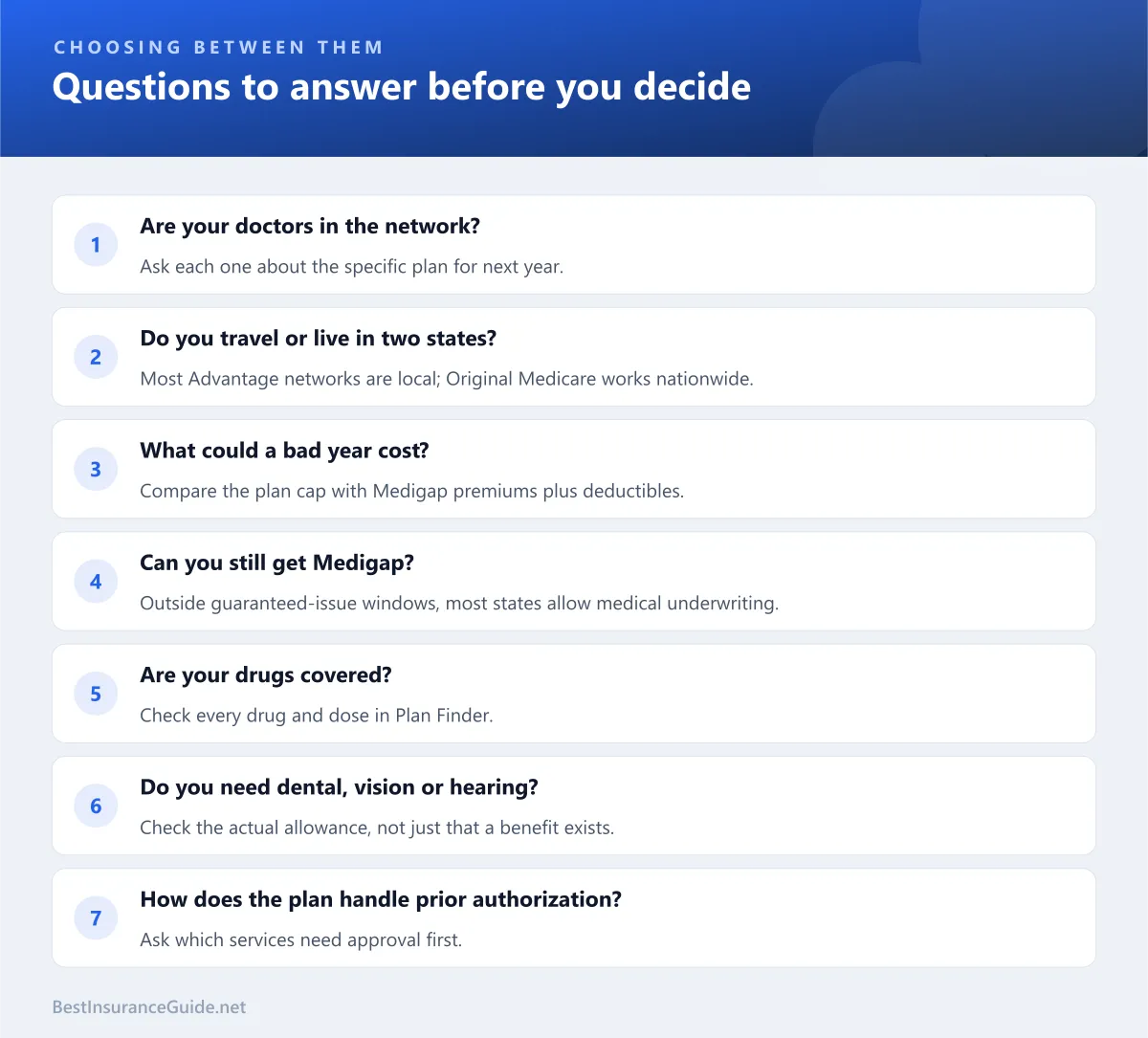
- Are my doctors and hospitals in the network for 2027? Ask them directly.
- Do I spend time away from home? Check how each plan covers care outside its area.
- What could a bad year cost? Compare the plan’s limit with Medigap premiums plus deductibles.
- Could I still buy Medigap later? Check your state’s rules and whether a trial right applies.
- Are all my drugs covered? Enter them in the Plan Finder on Medicare.gov.
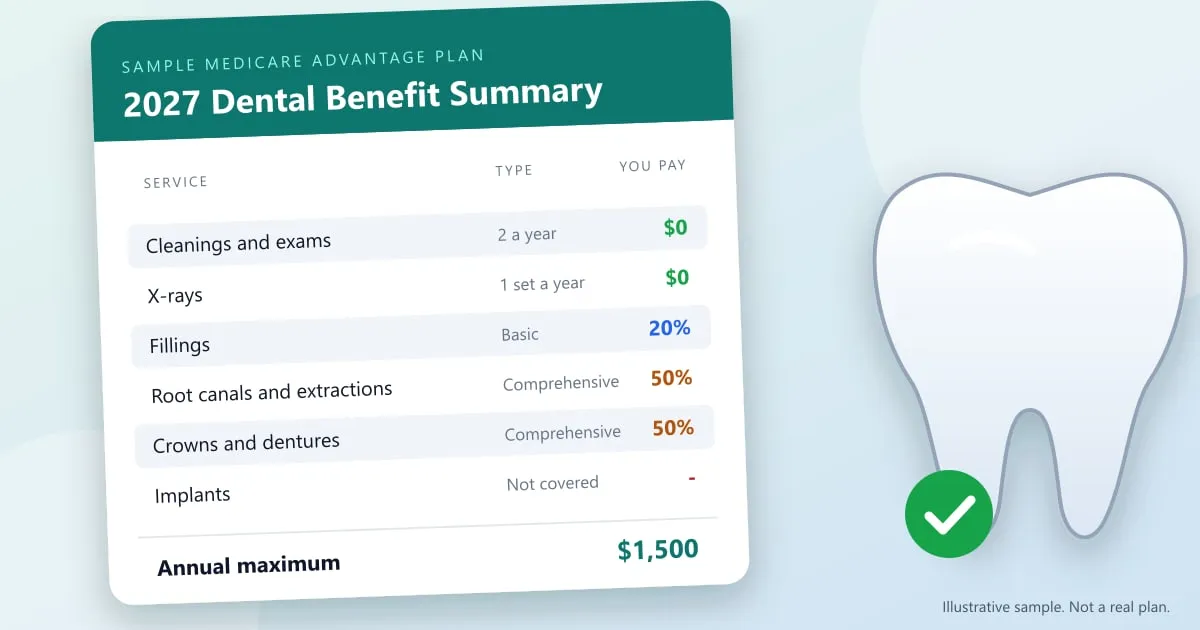
- How much are the extras really worth? Check dental annual limits and hearing aid allowances.
- Which services need prior authorization? Ask the plan, especially for treatments you already use.
If cost is the deciding factor, check whether you qualify for Extra Help or a Medicare Savings Program before you choose.
Related reading
- When is Medicare open enrollment? covers the dates and what you can change.
- Medigap Plan G vs Plan N compares the two most popular supplement plans.
- Medicare 2027 changes lists next year’s premiums, Part D limits and dates.
- Medicare Part D 2027 explains the new deductible and out-of-pocket cap.
- When to sign up for Medicare covers first-time enrollment at 65.
Sources and notes
- Medicare.gov, “Compare Original Medicare & Medicare Advantage” and “Medigap guaranteed issue rights”: how each works, enrollment periods and guaranteed-issue rights, including the trial right.
- CMS, final CY 2027 Medicare Advantage bid instructions (April 2026): maximum out-of-pocket limits of $9,850 in-network and $14,800 combined.
- CMS, “2026 Medicare Parts A & B Premiums and Deductibles”: $202.90 Part B premium, $283 Part B deductible and $1,736 Part A deductible.
- 2026 Medicare Trustees Report, as reported by MOAA: projected 2027 Part B premium of $209.50.
- KFF, “Medicare Advantage in 2026: Enrollment Update and Key Trends”: 55% of eligible beneficiaries and 35.2 million enrollees.
- KFF, “Medicare Advantage in 2026: Premiums, Out-of-Pocket Limits, Supplemental Benefits, and Prior Authorization”: 75% paying no extra premium and Part B premium reductions.
- KFF, “Medicare Advantage Insurers Made Nearly 53 Million Prior Authorization Determinations in 2024”: 4.1 million (7.7%) denied, 11.5% of denials appealed and 80.7% of appeals overturned.
- KFF, “Key Facts About Medigap Enrollment and Premiums for Medicare Beneficiaries” (October 2026): average Plan G premium of $194 a month.
- CMS Innovation Center, WISeR Model: prior authorization for selected services in six states from January 1, 2026.
- The cost comparison is illustrative. Medigap premiums vary by age, state and insurer, and Medicare Advantage copays and limits vary by plan.
This article is general information, not legal or benefits advice. Plan availability, networks and costs depend on where you live. Your State Health Insurance Assistance Program (SHIP) offers free, unbiased one-to-one Medicare counselling.