Medicare 2027: Part B Premium, Open Enrollment Dates and Every Major Change
Medicare 2027: Part B projected at $209.50, Part D deductible $700 and $2,400 cap. Open enrollment runs Oct 15 to Dec 7, 2026.

Table of contents

Medicare’s annual open enrollment runs from October 15 to December 7, 2026, and it is the one window each year when most of the roughly 70 million people on Medicare can change their coverage for the coming year.
For 2027, the picture is mixed. The Part B premium is projected to rise modestly. Part D drug coverage gets a higher deductible and a higher out-of-pocket cap. Medicare Advantage premiums are projected to fall on average. And as every year, individual plans are changing their drug lists, networks and costs.
This guide covers the confirmed numbers, the projections, the key dates and a simple process for choosing a plan. This site is independent and not affiliated with Medicare, CMS or any insurer. Figures are attributed to CMS and the Medicare Trustees below.
Medicare 2027 at a glance
| Detail | 2026 | 2027 | Status |
|---|---|---|---|
| Part B standard premium | $202.90 a month | $209.50 a month | Projected (Trustees Report) |
| Part B deductible | $283 a year | To be announced | CMS, usually November |
| Part D maximum deductible | $615 | $700 | Confirmed (CMS) |
| Part D out-of-pocket cap | $2,100 | $2,400 | Confirmed (CMS) |
| Part D base beneficiary premium | $38.99 | $41.33 | Confirmed (CMS) |
| Average Medicare Advantage premium | $14.37 | ≈$12.00 | Projected (CMS) |
| Average standalone Part D premium | $35.09 | ≈$36 | Projected (CMS) |
Key dates for Medicare open enrollment 2027
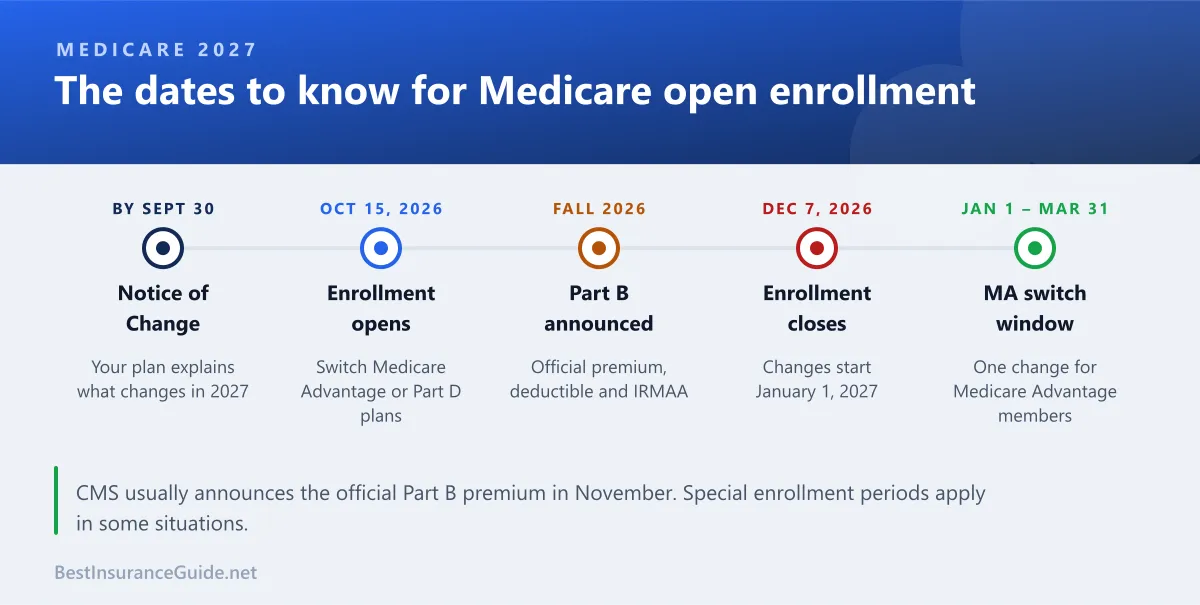
- By September 30, 2026: plans send their Annual Notice of Change (ANOC), explaining what changes in 2027.
- October 15, 2026: open enrollment begins. You can switch between Original Medicare and Medicare Advantage, change Medicare Advantage plans, or change Part D plans.
- Fall 2026, usually November: CMS announces the official 2027 Part B premium, deductible and IRMAA brackets.
- December 7, 2026: open enrollment ends. Missed it? Our Medicare open enrollment guide covers the January to March second chance and Special Enrollment Periods.
- January 1, 2027: your new coverage begins.
- January 1 – March 31, 2027: the Medicare Advantage Open Enrollment Period. If you are in a Medicare Advantage plan, you can switch to another one or return to Original Medicare, once.
The 2027 Part B premium: a smaller increase than expected
The Part B premium covers doctor visits, outpatient care and other medical services, and most people pay the standard amount.
- 2026 standard premium: $202.90 a month, set by CMS in November 2025. That was up $17.90 from $185.00 in 2025, with a $283 deductible.
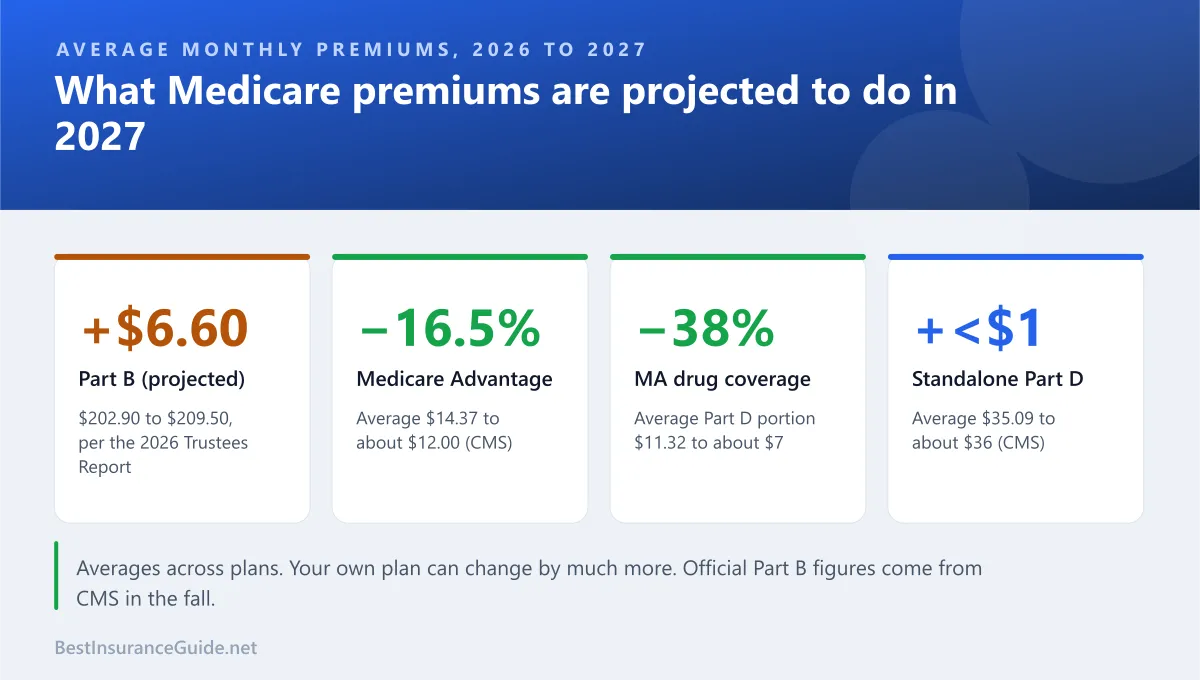
- 2027 projection: $209.50 a month, according to the 2026 Medicare Trustees Report released in June 2026. That would be an increase of about $6.60, or roughly 3.25%.
That projection is notably lower than the $218.60 the previous year’s Trustees Report had forecast for 2027. If it holds, it would be one of the smaller increases in recent years. The Trustees also project faster increases in later years.
It is a projection, not the final number. CMS sets the official 2027 premium and deductible in the fall, usually in November. Higher-income beneficiaries also pay an income-related monthly adjustment amount (IRMAA) on top of the standard premium. The 2027 brackets are announced at the same time. We will update this article when CMS publishes the official figures.
Part D in 2027: higher deductible, higher cap
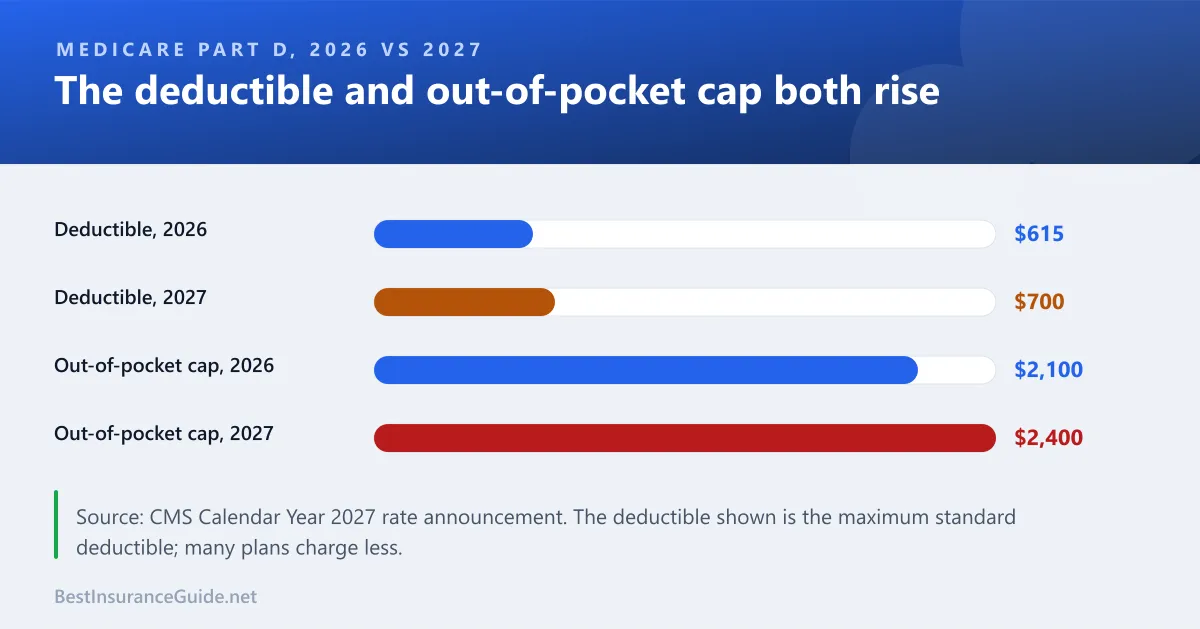
Since 2025, Part D has had an annual out-of-pocket cap on covered drug costs. It is one of the most important protections in Medicare for people who take expensive medicines. Both the cap and the deductible are indexed each year. According to CMS’s 2027 rate announcement: For what Part D covers, the shrinking number of stand-alone plans and how to pick one, see our Medicare Part D 2027 guide.
- The maximum standard deductible rises from $615 to $700.
- The annual out-of-pocket threshold rises from $2,100 to $2,400. Once your out-of-pocket drug costs reach it, you pay nothing more for covered Part D drugs for the rest of 2027.

Photo: National Cancer Institute / Rhoda Baer, public domain, via Wikimedia Commons.
Premiums for drug coverage
CMS released its 2027 Part D figures on July 28, 2026:
- The Part D base beneficiary premium, which is used to calculate late-enrollment penalties, rises from $38.99 to $41.33.
- The average total premium for standalone Part D plans is projected to rise by less than $1 a month, from $35.09 to about $36.
- For Medicare Advantage plans with drug coverage, the average Part D portion of the premium is projected to fall from $11.32 to about $7.
Averages hide big differences. Your plan’s premium could rise or fall far more than the average, and the deductible your plan actually charges could be anywhere from $0 to $700. That is why comparing plans matters more than the headline figures.
Worked example: what the higher cap means
Illustrative. Suppose you take a costly specialty medicine and would reach the cap early in the year:
- 2026: you pay up to $2,100 out of pocket for covered drugs.
- 2027: you pay up to $2,400, which is $300 more in the worst case.
If you take only low-cost generics, you are unlikely to reach the cap, and your premium and deductible matter more. You can also spread out-of-pocket costs into monthly payments through the Medicare Prescription Payment Plan. Ask your plan about it if large costs early in the year are a problem.
Medicare Advantage in 2027: lower average premiums
In its July 2026 announcement, CMS projected:
- The weighted average monthly Medicare Advantage premium falls from $14.37 to about $12.00, roughly 16.5% lower.
- Many Medicare Advantage plans continue to charge $0 premiums beyond the Part B premium you still pay.
Lower average premiums do not mean every plan is better. Each year, Medicare Advantage plans can change:
- Provider networks, the doctors and hospitals you can use
- Drug formularies and pharmacy networks
- Copays, coinsurance and maximum out-of-pocket limits
- Extra benefits such as dental, vision and hearing allowances
- Prior authorization requirements
Some plans also leave particular counties. If yours is not renewing, you will get a notice and a special window to choose another plan.
How to choose a plan for 2027 in five steps
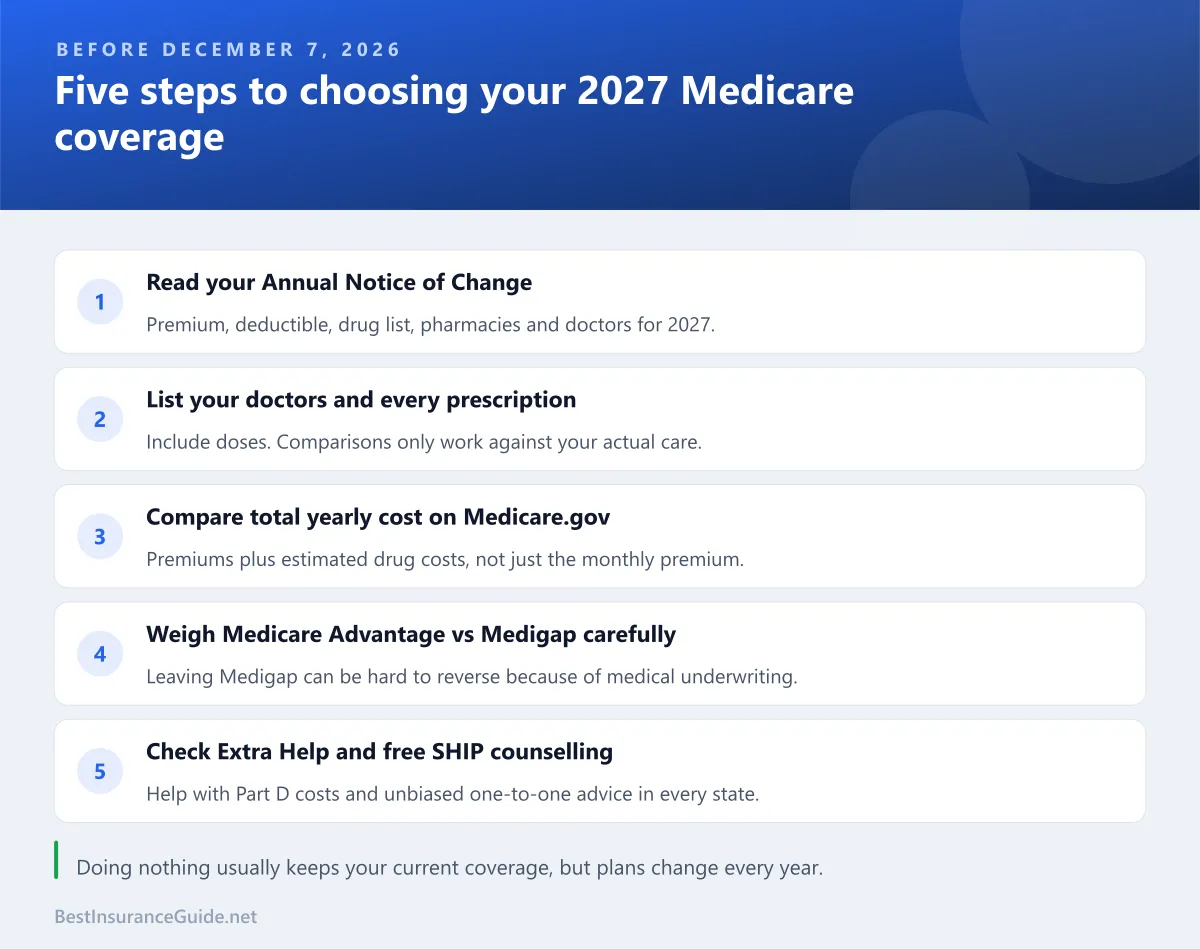
1. Read your Annual Notice of Change
Your plan’s ANOC lists what changes on January 1. Look for changes to your premium, deductible, drug coverage, pharmacies and doctors.
2. List your doctors and every prescription
Write down your doctors, hospitals and every prescription with its dose. Plan comparisons only work if you check the plans against your actual care.
3. Compare plans on Medicare.gov
Medicare.gov’s Plan Finder shows each plan’s estimated total yearly cost, including premiums and drug costs, for your specific prescriptions. Compare the total yearly cost, not just the premium.
4. Think about Original Medicare vs Medicare Advantage carefully
Original Medicare with a Medigap policy and a Part D plan usually costs more each month but gives broader access to doctors nationwide. Medicare Advantage often costs less upfront but uses networks and prior authorization. Our guide to Original Medicare vs Medicare Advantage compares costs, networks and prior authorization in detail.
If you leave Medicare Advantage for Original Medicare, a Medigap insurer may be able to use medical underwriting in many states. That can make a Medigap policy hard to get later, so think carefully before switching away from Medigap.
5. Check for help with costs
- Extra Help (the Low-Income Subsidy) lowers Part D premiums, deductibles and copays for people with limited income and resources.
- Medicare Savings Programs can pay Part B premiums for eligible people.
- SHIP counsellors, the State Health Insurance Assistance Program, give free, unbiased one-on-one help in every state.
Original Medicare vs Medicare Advantage: a quick comparison
| Detail | Original Medicare + Medigap + Part D | Medicare Advantage |
|---|---|---|
| Monthly cost | Higher: Medigap and Part D premiums on top of Part B | Often low or $0 beyond Part B |
| Doctors and hospitals | Any provider that accepts Medicare, nationwide | Usually a network (HMO or PPO) |
| Out-of-pocket risk | Low with a comprehensive Medigap plan | Capped by the plan’s annual maximum |
| Prior authorization | Rarely needed | Common for many services |
| Extra benefits | Generally none | Often dental, vision or hearing allowances |
| Switching later | Easy to move to Medicare Advantage | Returning to Medigap may require medical underwriting |
General comparison. Exact costs and rules depend on the plans available where you live.
Neither is better for everyone. Medicare Advantage tends to suit people who are comfortable with a network and want low monthly costs. Original Medicare with Medigap tends to suit people who travel, see specialists often or want the freedom to see any provider.
Five open enrollment mistakes to avoid
- Choosing on premium alone. A $0-premium plan can cost far more over the year if your drugs are on a high tier or your doctors are out of network. Compare the total yearly cost.
- Assuming nothing changed. Plans change drug lists and networks every January. A drug that was covered in 2026 may need prior authorization, or may not be covered, in 2027.
- Forgetting a pharmacy check. Many plans have preferred pharmacies with much lower copays. Make sure yours is one.
- Missing December 7. Outside special circumstances, a missed deadline means waiting a year, or until the January–March window if you are in Medicare Advantage.
- Dropping Medigap casually. If you leave Medigap to try Medicare Advantage, getting a Medigap policy back later is not guaranteed in most states.
Not on Medicare yet?
If you are approaching 65, the rules are different. You usually have a seven-month Initial Enrollment Period around your 65th birthday, and missing it can mean lifelong late penalties. Our guide to when to sign up for Medicare walks through every window and deadline. Our guide can you get Medicare at 62? explains coverage options before 65, and Medicare vs Medicaid explains how the two programmes differ.
If you are under 65 and buy your own coverage, the separate ACA open enrollment for 2027 runs from November 1. For dental coverage, which Original Medicare largely does not include, see best dental insurance for seniors on Medicare.
What to watch before December 7
- CMS’s official 2027 Part B premium and deductible, usually announced in November.
- 2027 IRMAA brackets, if your income is higher.
- Your plan’s changes, especially to drug coverage and networks.
We will update this guide with official figures as CMS releases them.
Related reading
Federal retirees choosing between Medicare and FEHB options should also read FEHB premiums 2027.
Comparing Medicare Advantage plans? The 2027 star ratings show how CMS rates each plan’s quality, and how to use the 5-star switch window.
Sources and notes
- CMS, “2026 Medicare Parts A & B Premiums and Deductibles,” November 14, 2025: Part B premium $202.90 and deductible $283.
- 2026 Annual Report of the Boards of Trustees of the Medicare trust funds, June 17, 2026, as reported by MOAA: projected 2027 Part B premium of $209.50.
- CMS, Announcement of Calendar Year 2027 Medicare Advantage capitation rates and Part C and Part D payment policies: Part D deductible $700 and out-of-pocket threshold $2,400.
- CMS, Annual release of Part D national average monthly bid amount, July 28, 2026: base beneficiary premium $41.33.
- CMS press release, “Medicare Advantage and Medicare Prescription Drug Programs Expected to Remain Stable in 2027,” July 2026: Medicare Advantage and Part D premium projections.
- Featured photo: National Cancer Institute / Rhoda Baer, public domain, via Wikimedia Commons.
This article is general information, not legal, financial or medical advice. Plan availability and costs vary by location. This site is independent and not affiliated with Medicare, CMS or any insurer.