Florida Renters Insurance Rates Cut 12.8% for 122,000 Policies: Who Benefits, and What Hurricane Coverage Renters Really Have
Florida approved a 12.8% renters insurance rate cut for 122,000 policies from Oct 11, 2026. Who qualifies, hurricane coverage and flood gaps.

Table of contents
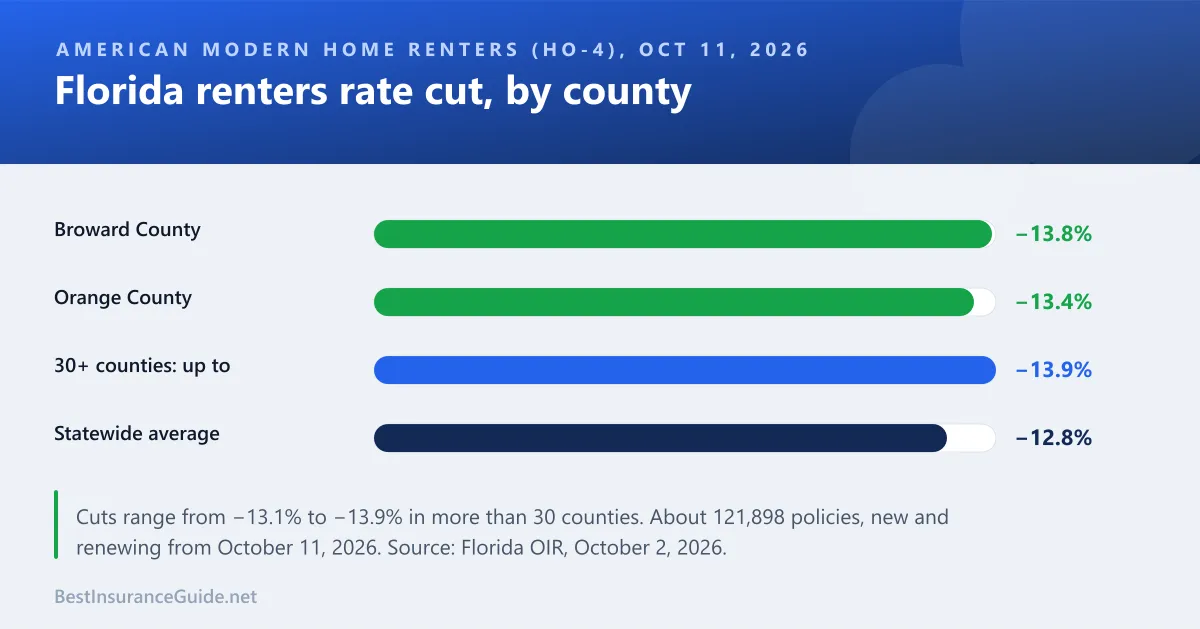
Florida renters have some rare good news on insurance prices. On October 2, 2026, Florida Insurance Commissioner Mike Yaworsky approved an average 12.8% rate decrease for renters insurance written by American Modern Home Insurance Company. The cut covers about 121,898 HO-4 (renters) policies across the state and takes effect on October 11, 2026, for both new policies and renewals.
The decrease is bigger in many places. Average cuts in more than 30 counties range from 13.1% to 13.9%, including Orange County (−13.4%) and Broward County (−13.8%), where the company has the most policies. The Office of Insurance Regulation (OIR) presented the approval as part of a broader run of rate decreases since Florida’s 2022 and 2023 insurance reforms.
This guide covers who gets the cut, what it is worth in dollars, and, because this is the middle of hurricane season, what Florida renters insurance actually covers in a hurricane and where the gaps are. This site is independent and not affiliated with American Modern, the Florida OIR or any insurer. Sources are listed at the end.
The rate cut at a glance
| Detail | Detail |
|---|---|
| Insurer | American Modern Home Insurance Company |
| Policy type | HO-4 renters insurance (contents and liability) |
| Policies affected | About 121,898 statewide |
| Average change | −12.8% |
| County range | −13.1% to −13.9% in more than 30 counties |
| Largest markets | Orange County −13.4%, Broward County −13.8% |
| Effective date | October 11, 2026, new business and renewals |
| Approved by | Florida Office of Insurance Regulation, announced October 2, 2026 |
Who benefits, and who doesn’t
- American Modern Home renters policyholders get the lower rate at their next renewal on or after October 11. Mid-term premiums do not change.
- New customers buying an American Modern Home renters policy from October 11 get the new rates immediately.
- Renters with other insurers are not affected by this approval. Your premium changes only if your insurer files for a change.
An average is an average. Your own change depends on your county, coverage limits, deductible and discounts. Some policyholders will see more than 12.8%, and some less.
What 12.8% is worth in dollars
Renters insurance is one of the cheaper policies you can buy, so the dollar savings are modest. They are still worth having in a state where homeowners have seen years of increases.
| Annual premium before the cut (illustrative) | 12.8% average decrease | New annual premium |
|---|---|---|
| $180 | −$23 | $157 |
| $240 | −$31 | $209 |
| $300 | −$38 | $262 |
| $360 (coastal, higher limits) | −$46 | $314 |
Illustrative premiums only, not quotes from American Modern Home. Third-party estimates for 2026 put typical Florida renters premiums at roughly $15 to $25 a month.
Why Florida rates are starting to fall
The OIR links decreases like this one to the property insurance reforms Florida passed in 2022 and 2023. Those laws limited one-way attorney fees in property claims, cut down on assignment-of-benefits litigation and changed claim deadlines. Since then, the state has approved decreases from several homeowners insurers, Citizens Property Insurance has cut rates and shed most of its policies to private companies, and new insurers have entered the market. We covered the homeowners side in Florida home insurance rates are falling.
Renters insurance makes up a small part of the market, and HO-4 policies are less exposed to hurricane losses than homeowners policies because they do not cover the building. That helps explain why renters pricing can move faster when conditions improve.
Does renters insurance cover hurricane damage in Florida?
This is the question most Florida renters search, and the answer has three parts.
1. Wind damage to your belongings: usually covered
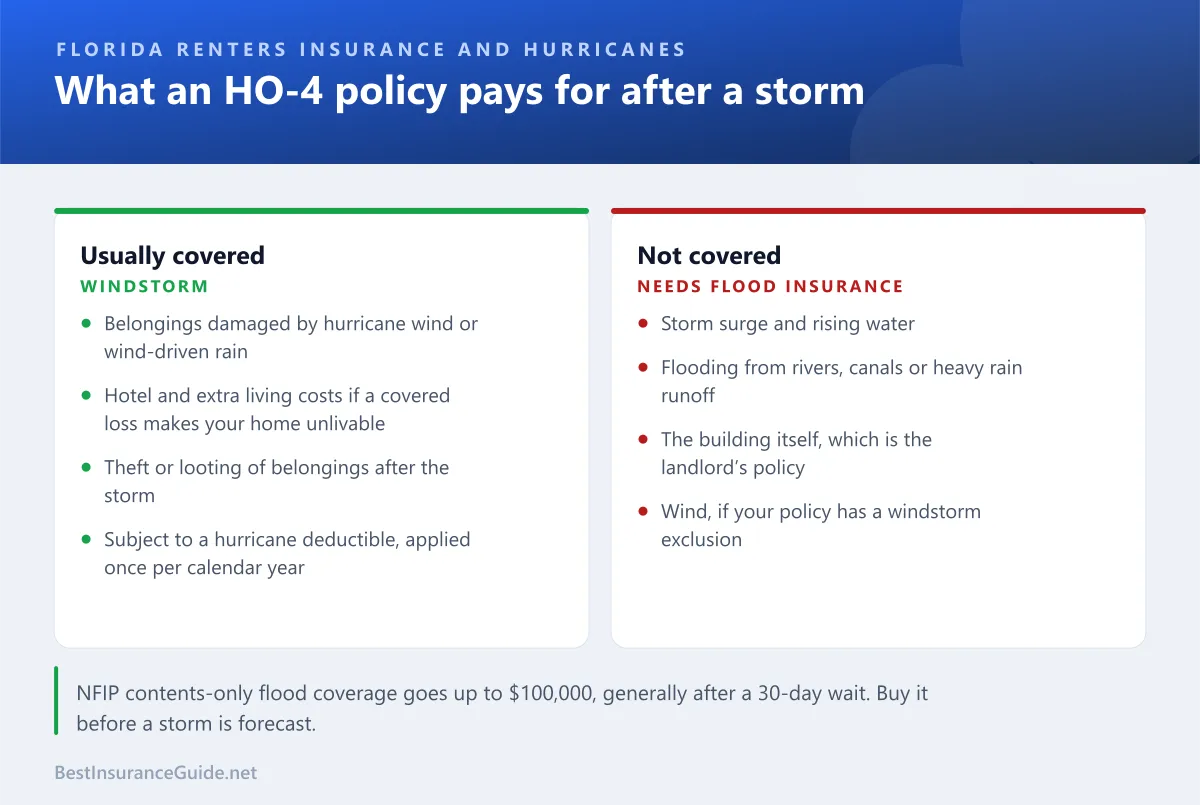
A standard HO-4 policy covers your personal property against windstorm, which includes hurricanes. If hurricane winds break a window and rain blows in and ruins your sofa, laptop and clothes, that is generally a covered loss.
Check two things in your declarations page:
- Is wind covered? In most Florida renters policies it is, but some policies in high-risk coastal areas exclude windstorm, which would leave you needing separate wind coverage.
- Is there a separate hurricane deductible? Many Florida policies have one. It may be a flat amount, such as $500, or a percentage of your personal property limit. Under Florida law, a hurricane deductible applies once per calendar year, not once per storm.
2. Flood and storm surge: not covered
Renters insurance does not cover flood, and that includes storm surge, rising water and overflowing rivers. For most coastal renters, this is the biggest gap.
You can buy contents-only flood insurance:
- NFIP: covers belongings up to $100,000, generally with a 30-day waiting period. The program is currently authorized until December 12, 2026, and existing policies stay in force regardless.
- Private flood insurers: sometimes higher limits or shorter waiting periods.
Your landlord’s flood policy, if there is one, covers the building, not your things. See does renters insurance cover flood damage? for more detail.
3. Displacement: often covered
If a covered loss such as wind damage makes your apartment unlivable, loss of use (also called additional living expenses) helps pay for a hotel, a short-term rental, extra food costs and similar expenses while repairs are made. Some policies also pay for a limited period when a civil authority order, such as a mandatory evacuation, prevents you from returning home. Read does renters insurance cover hotel stays? for how limits typically work.
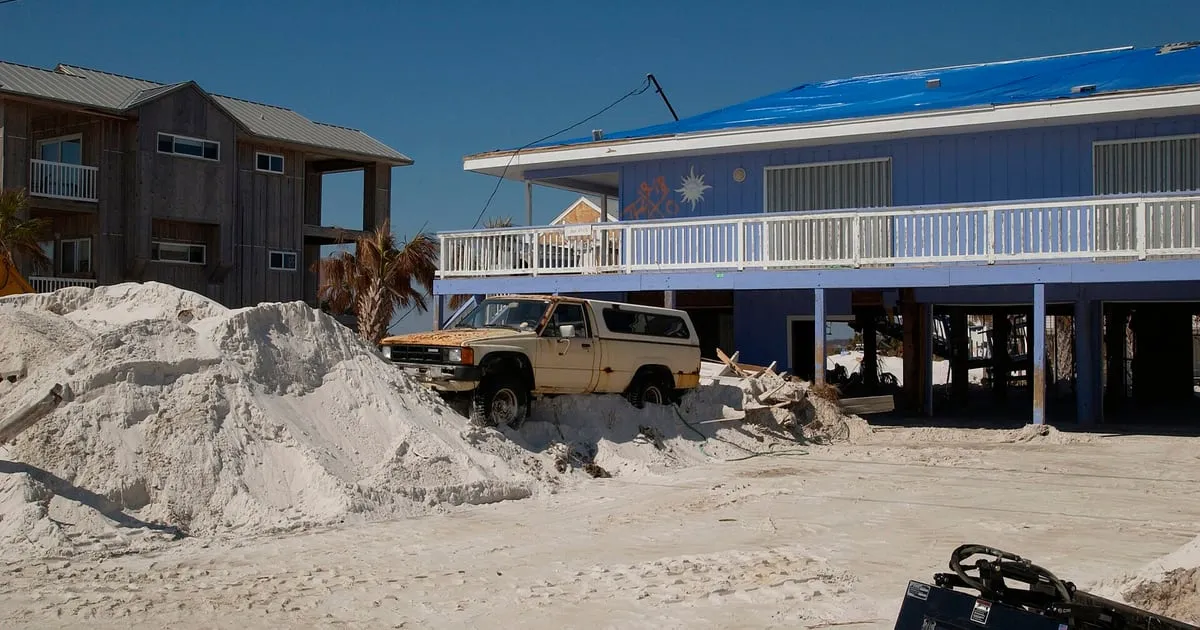
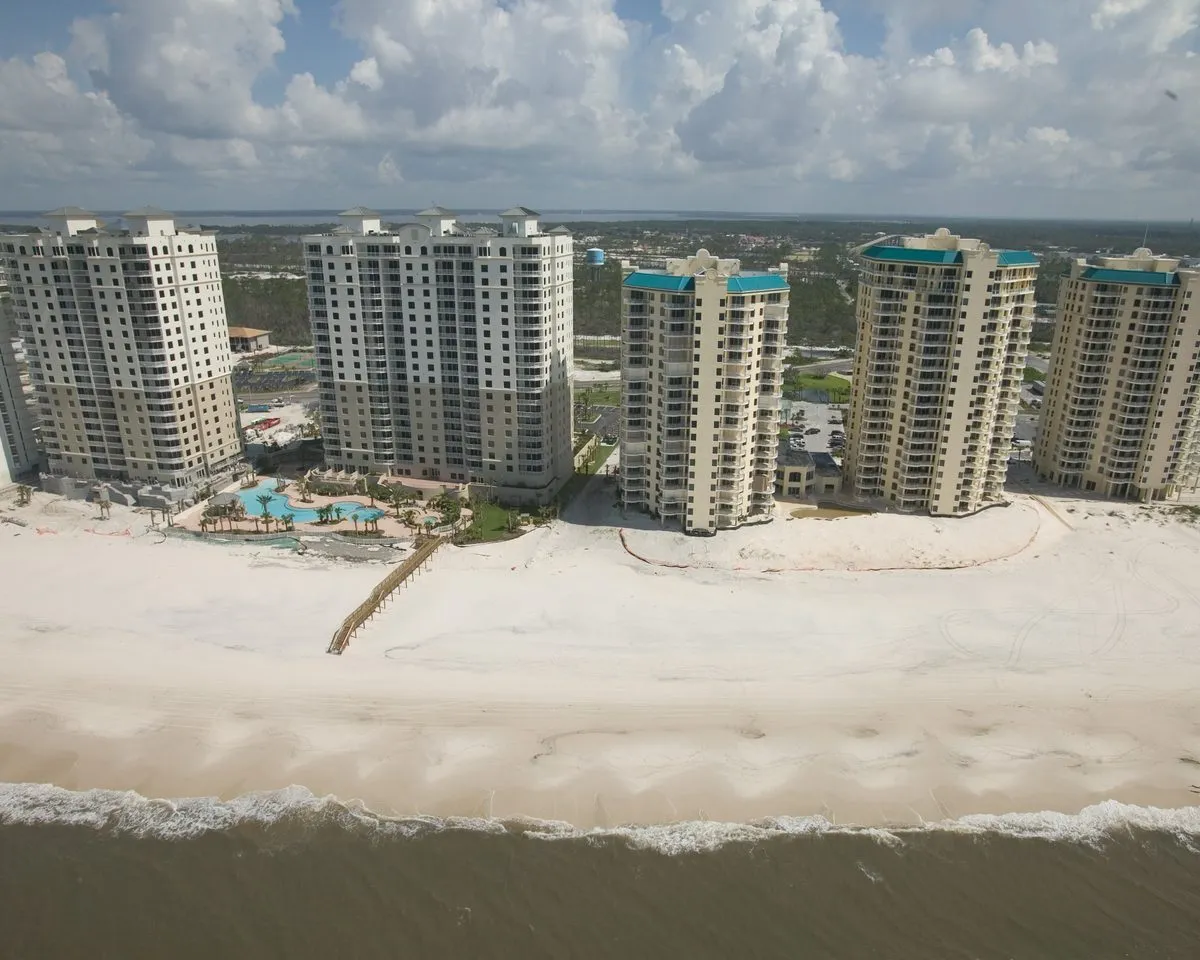 Condominium towers on Perdido Key after Hurricane Dennis, July 2005. Photo: Andrea Booher, FEMA (public domain).
Worked example: one storm, two kinds of damage
A renter in Broward County has $30,000 of personal property coverage at replacement cost, a $500 all-other-perils deductible and a 2% hurricane deductible ($600).
| Damage after the hurricane | Covered by renters insurance? | Payment |
|---|---|---|
| Wind breaks a sliding door; rain ruins $8,000 of furniture and electronics | Yes, windstorm | $8,000 − $600 hurricane deductible = $7,400 |
| Storm surge floods the ground floor; $5,000 of belongings in a storage closet ruined | No, flood is excluded | $0 (an NFIP contents policy would respond) |
| Apartment unlivable for three weeks; $2,700 in hotel and extra meals | Yes, loss of use from a covered peril | Up to the policy’s loss-of-use limit |
Illustrative example. Your policy’s terms, limits and deductibles control what is paid.
Other gaps Florida renters often miss
Hurricanes get the attention, but these gaps catch out Florida renters just as often.
- Special limits on valuables. Most renters policies cap theft payouts for jewelry, watches, firearms and collectibles, often at a few thousand dollars in total. If you own an engagement ring or expensive camera gear, ask about scheduling it for its full value.
- Mold. Florida’s humidity makes mold common after any water damage. Many policies limit or exclude mold unless it results directly from a covered loss, and some cap mold payments at a low amount. Dry out wet areas quickly and report water damage promptly.
- Roommates. A renters policy usually covers only the named insured and relatives living with them. Unrelated roommates need their own policies, even if you split rent.
- Liability limits. A standard $100,000 liability limit may be lower than your lease requires, or lower than you need if you have a dog. Raising it usually costs little.
- Students living away. Children at a Florida college may be covered under a parent’s policy for belongings in a dorm, often with a limit. An off-campus apartment usually needs its own policy.
- Manufactured and mobile homes. If you rent a mobile home, check that the policy form fits your situation. Some standard HO-4 forms are not written for manufactured homes.
If you insure with American Modern Home
You don’t need to do anything to get the lower rate. It applies automatically on renewals from October 11. When your renewal notice arrives, check the premium against last year’s and make sure your coverage limits did not change. If the price did not fall, or if you have had a claim, a credit change or a move since your last renewal, call your agent and ask why. Use the renewal as a prompt to review your hurricane deductible and decide whether to add flood coverage.
Is renters insurance required in Florida?
Not by state law. But landlords can require it in the lease, and many Florida apartment communities do, often with a minimum liability limit such as $100,000. Even when it is optional, it is usually worth having. Your landlord’s policy covers the building, not your belongings or your liability if a guest is injured in your unit. See do I need renters insurance?.
How to make sure you pay less
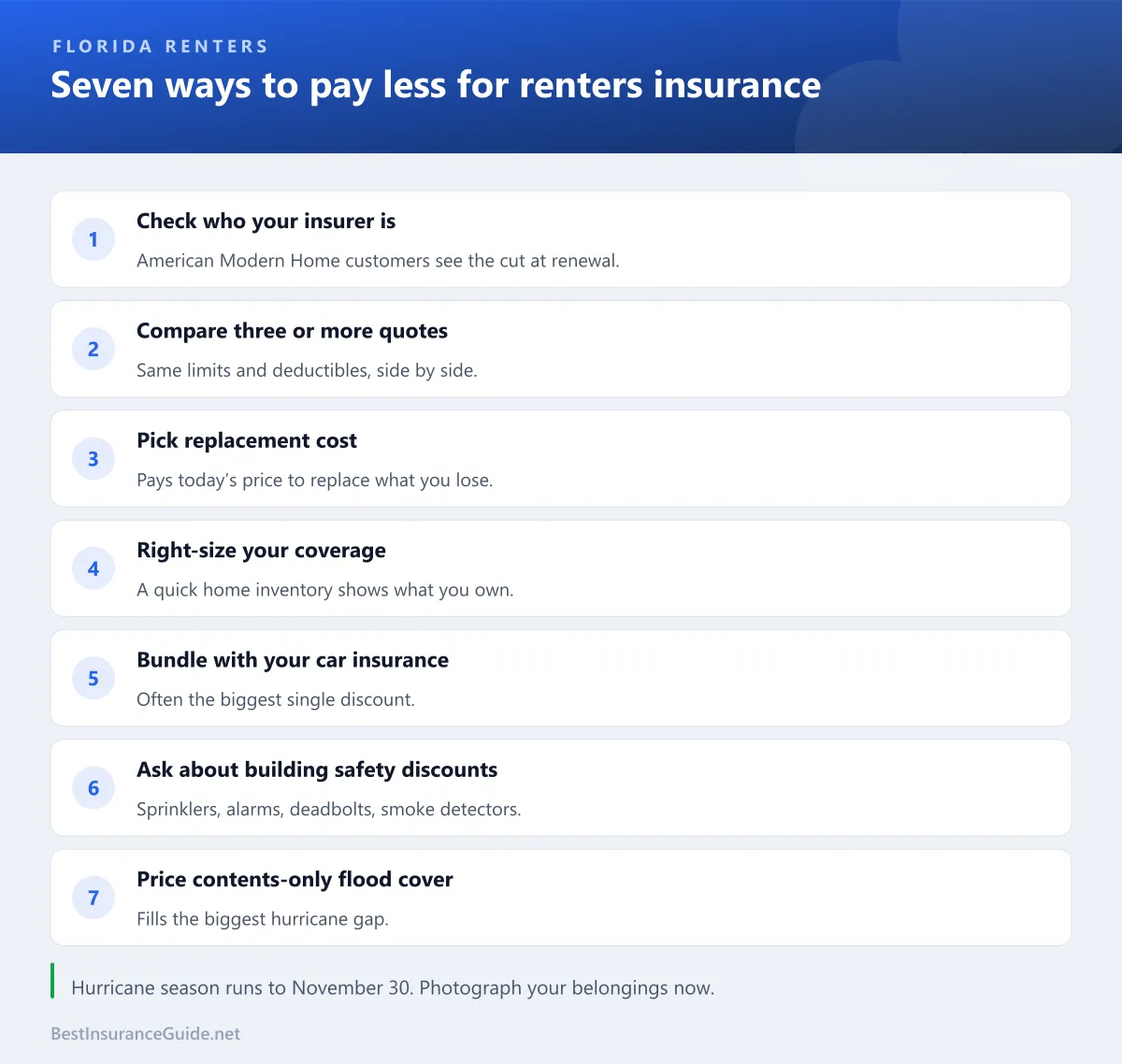
- Check who your insurer is. It is on your declarations page. If it is American Modern Home, look for the lower rate on your next renewal notice.
- Shop around at renewal. A decrease at one company is a reminder that prices vary. Get at least three quotes for the same limits and deductibles.
- Choose replacement cost. It costs a little more than actual cash value but pays to replace belongings at today’s prices. See replacement cost vs actual cash value.
- Right-size your coverage. Do a quick home inventory. Many renters over-insure or, more often, under-insure.
- Bundle with auto. Multi-policy discounts are often the single biggest saving on a renters policy.
- Ask about protective device discounts, such as smoke detectors, sprinklers, deadbolts and monitored alarms in your building.
- Price flood separately. A contents-only flood policy can be inexpensive away from the coast, and it fills the biggest hurricane gap.
Hurricane season checklist for Florida renters
Hurricane season runs June 1 to November 30, so October storms are still a real risk.
- Photograph or video every room now, and store the files in the cloud.
- Keep receipts for electronics, furniture and other big purchases.
- Know your deductibles, both the standard one and the hurricane one.
- Buy flood coverage early. The 30-day NFIP wait means it must be in place well before a storm forms.
- After a storm, prevent further damage if it is safe, document everything, and report the claim promptly. Florida law generally requires notice of a new property claim within one year of the date of loss.
Related reading
Renters insurance in Florida covers average costs by city, Citizens, sinkholes and Florida’s claim deadlines. Does homeowners insurance cover hurricane damage? explains hurricane deductibles and claims in detail. Florida home insurance rates are falling covers Citizens’ cuts and the wider market. Do I need flood insurance? explains NFIP and private flood options, and insurance claim denied? explains what to do if a hurricane claim goes wrong.
Sources and notes
- Florida Office of Insurance Regulation, “Commissioner Mike Yaworsky Approves an Average −12.8% Rate Decrease for More Than 120,000 Rental Insurance Policies, Effective this Month”, October 2, 2026, and coverage by The Capitolist.
- Florida Statutes §627.701 (hurricane deductibles, applied once per calendar year) and §627.70132 (claim notice deadlines).
- FEMA and the National Flood Insurance Program: contents-only coverage limits and the waiting period; NFIP authorization through December 12, 2026 (Insurance Journal, October 7, 2026).
- Third-party 2026 estimates of Florida renters insurance premiums (for context only).
- Featured photo: Dmitriy Me2dev via Unsplash, CC0, via Wikimedia Commons. In-body photo: Andrea Booher, FEMA, public domain, via Wikimedia Commons.
This article is general information, not insurance or legal advice. Policy terms, deductibles and exclusions vary by insurer and policy. Read your own policy and ask your agent or insurer about your coverage.