Why Is My Car Insurance Going Up in 2026? 12 Reasons, and What to Do
Why is my car insurance going up when national prices are falling? 12 common reasons your premium rose in 2026, and 9 ways to lower it.

Table of contents
If your car insurance renewal just landed with a higher price, you are not imagining it, and you are not alone. Searches for “why is my car insurance going up” hit a 12-month high this autumn.
What makes it confusing is that the national picture looks calm. Government price data shows car insurance prices falling in recent months, and one major rate study expects the national average to end 2026 only about 1% higher. So why is your bill up?
The short answer: national averages hide big state differences, and most of the price of your policy is set by factors specific to you, your car and your area. This guide shows where rates are rising, the 12 most common reasons an individual renewal goes up, and nine practical ways to bring it down.
This site is independent and not affiliated with any insurer. Figures are attributed to their sources below.
The national picture in late 2026
Two widely watched measures tell a consistent story: no national spike, but no relief everywhere either.
- Government price data: in its September 2026 release, the U.S. Bureau of Labor Statistics reported that the consumer price index for motor vehicle insurance fell 0.8% in August 2026, after falling 0.3% in July.
- Rate-quote data: Insurify’s 2026 mid-year report found that the average annual cost of full coverage fell 6% in 2025, to $2,144, then rose about 1% in the first half of 2026, to $2,237. It projects 2026 to end about 1% higher than 2025.
After the large increases of 2023 and 2024, that is a market that has largely stabilised on average. The catch is in the distribution: Insurify found 27 states had increases in the first half of 2026, and projects 32 states will by year-end.
Where car insurance is rising and falling
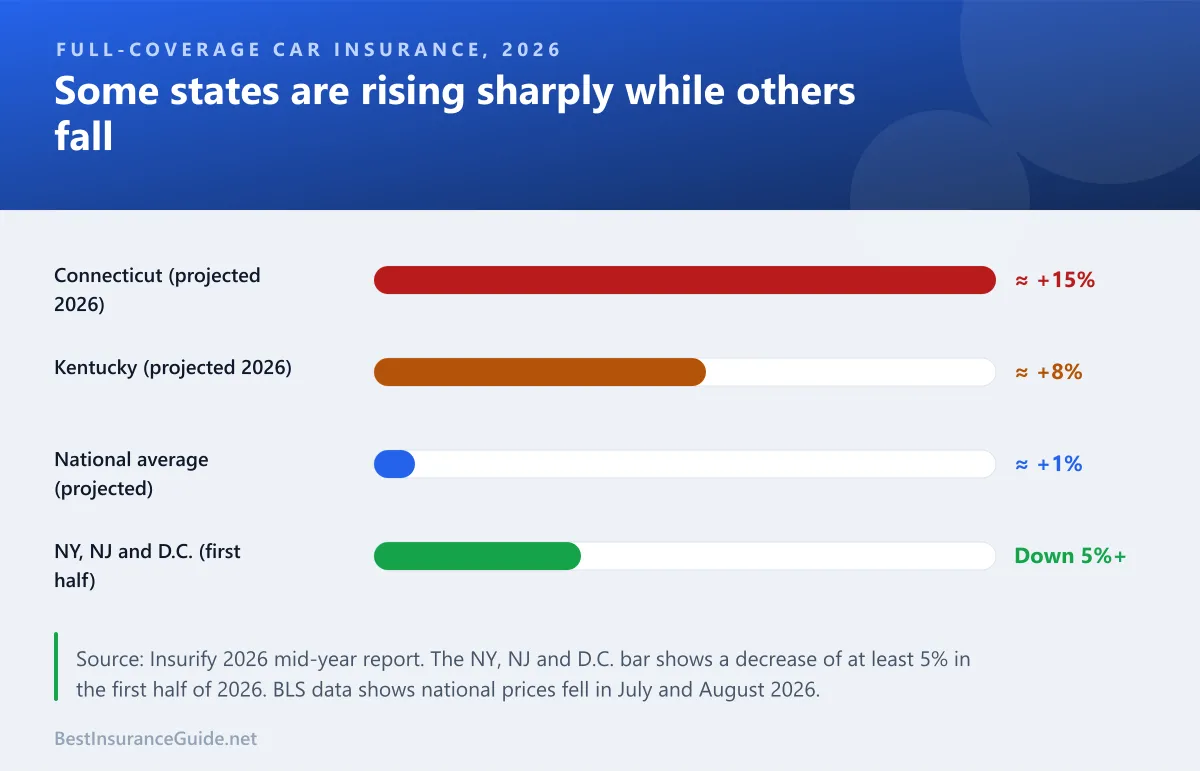
According to Insurify’s 2026 mid-year report:
- Connecticut has the steepest increase in the country. Full coverage averaged $2,652 in June 2026, up 10.5% ($251) since January, and is projected to reach about $2,753 by December, a rise of nearly 15% for the year. Our Connecticut car insurance guide covers that market.
- Kentucky is projected to rise about 8%. See car insurance in Kentucky.
- New York, New Jersey and Washington, D.C., three of the most expensive places to insure a car, saw premiums fall at least 5% in the first half of the year.
So a driver in Hartford and a driver in Newark can both read “car insurance rates in 2026” and have completely opposite experiences.
12 reasons your car insurance went up
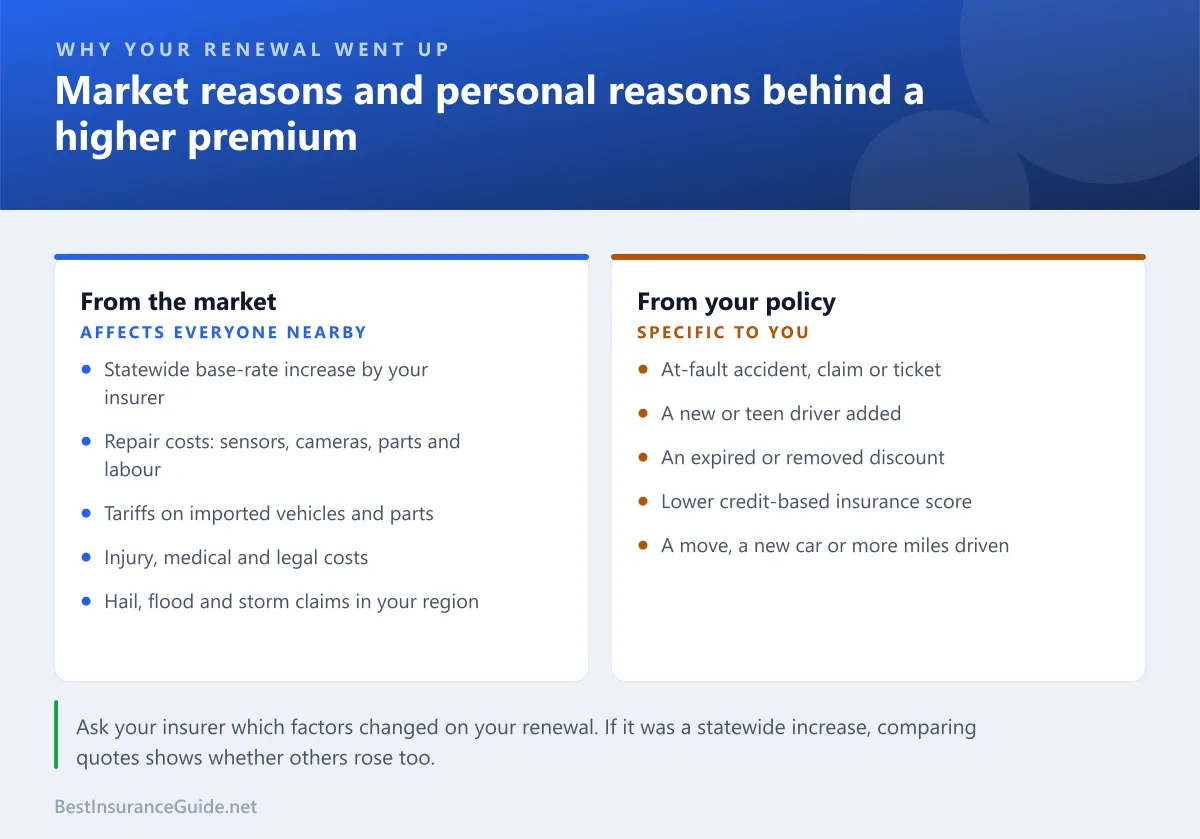
Most renewal increases come from one or more of these. The first group is about the market. The second is about you.
Reasons that come from the market
1. A statewide rate increase. Insurers file rating plans with state regulators. When an insurer’s approved base rates rise in your state, nearly every customer’s renewal goes up, even with a perfect record.
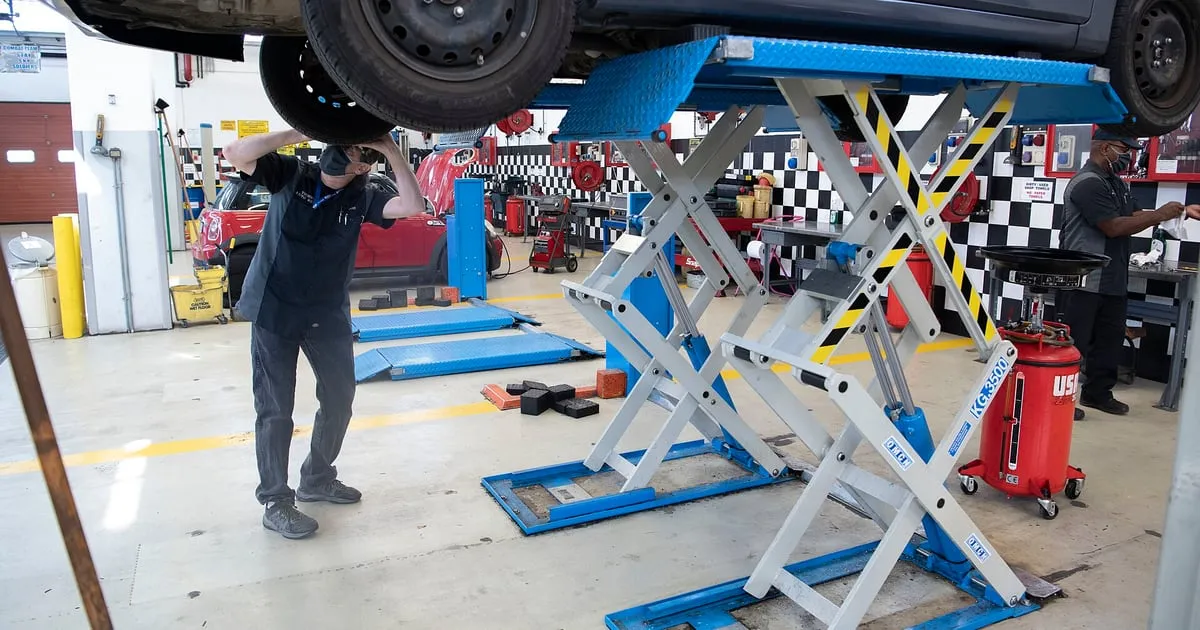
2. Repair costs. Modern cars are full of sensors, cameras and driver-assistance systems. A minor bumper repair can now include recalibrating sensors, and parts and skilled labour cost more than they did a few years ago. Insurers price that into collision and comprehensive coverage.

Photo: U.S. Army / Sgt. Sarla Dominguez, public domain, via Wikimedia Commons.
3. Parts and tariffs. Tariffs on imported vehicles and auto parts can push repair costs higher. Analysts have noted that the effect on premiums has so far been limited but could show up over time as claims are paid.
4. Injury and legal costs. Medical bills and the size of injury settlements drive the cost of liability coverage, which every driver carries.
5. Weather. Hail, floods and severe storms produce large numbers of comprehensive claims in some regions. That is one reason premiums move so differently from state to state.
Reasons that come from your policy
6. An at-fault accident or claim. This is the most common cause of a big personal jump. Our guide to how much car insurance goes up after an accident covers the typical surcharges and how long they last.
7. A ticket or violation. Speeding tickets, especially multiple ones, and serious violations such as DUI raise premiums at renewal.
8. A new driver on the policy. Adding a teenager is one of the biggest single increases a family will see. See how much car insurance costs for a 16-year-old.
9. A lost discount. Discounts can quietly expire. A teen’s good-student discount, a multi-policy bundle you ended, a paid-in-full or paperless discount you switched off, or a new-customer discount that only lasted one term.
10. A change in your insurance score. In most states, insurers can use a credit-based insurance score. If it worsened, your price can rise. Our guide to insurance scores explains how they work. If credit information led to a higher premium, federal law generally requires the insurer to tell you.
11. A move or a new car. Moving to a ZIP code with more traffic, theft or claims raises premiums. So can replacing your car with one that costs more to repair.
12. More use of the car. Higher annual mileage, starting to commute, or using the car for rideshare or delivery work all change the risk you are rated for. Delivery and rideshare use usually needs to be disclosed.
Worked example: how a “no-claims” renewal can still go up
Illustrative figures only. Consider a driver with a clean record and a current premium of $1,800:
| Change at renewal | Effect | New premium |
|---|---|---|
| Starting premium | $1,800 | |
| Insurer’s statewide base-rate increase | +5% | $1,890 |
| New-customer discount expires | +$90 | $1,980 |
| Car moves into a higher repair-cost group | +3% | $2,039 |
The driver did nothing differently, yet the bill rose about 13%. This is why the first step is always to ask your insurer exactly which factors changed.
Nine ways to lower your car insurance
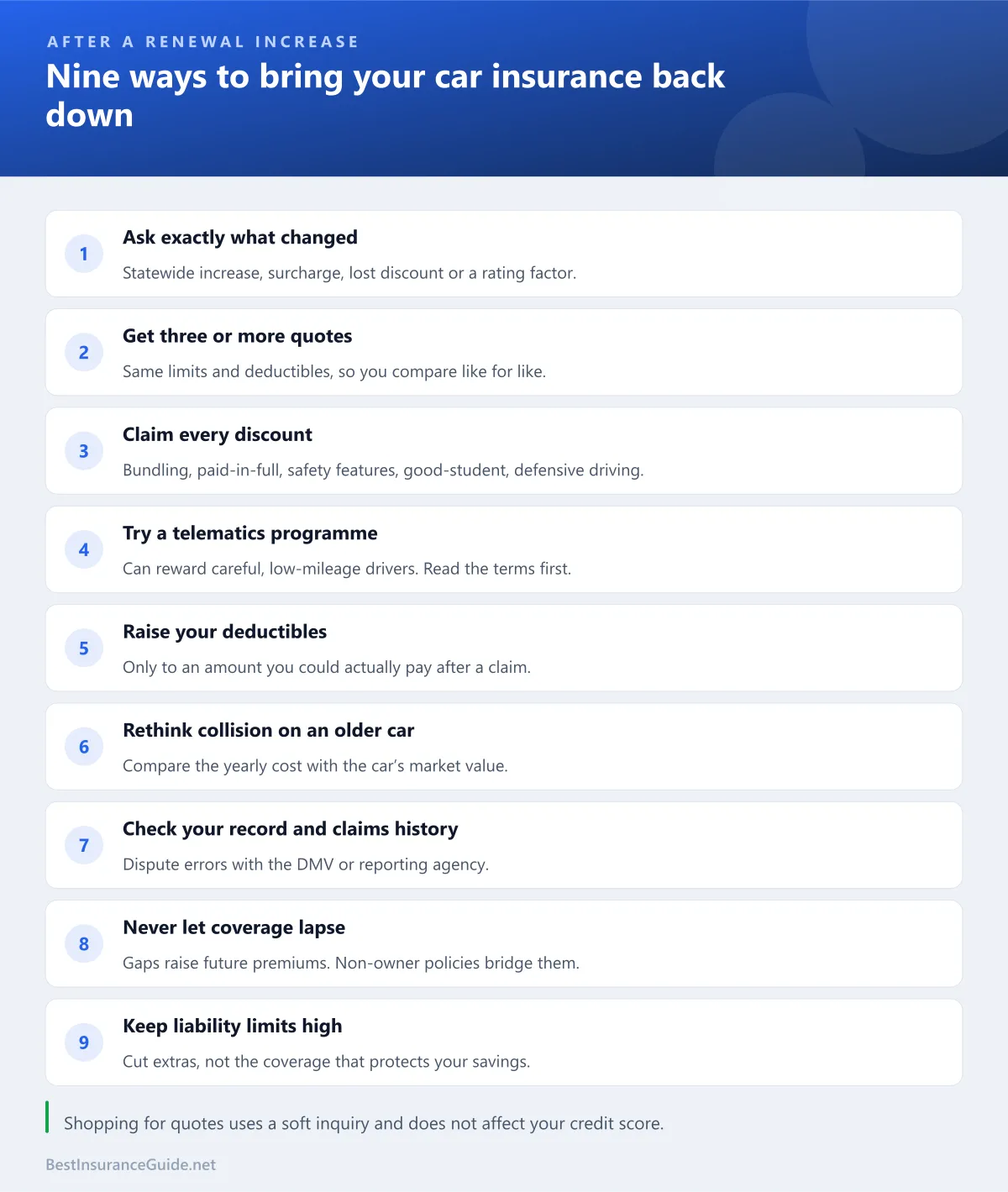
1. Ask why it went up
Call or message your insurer and ask which rating factors changed. If it was a statewide increase, shopping around will tell you whether other insurers’ prices rose too. If it was a surcharge or lost discount, you may be able to fix it.
2. Shop around at every renewal
Insurers price the same driver very differently, and one company’s increase can be another’s price cut. Get at least three quotes for the same coverage limits and deductibles. Our guide to how to switch car insurance explains how to switch without a gap in coverage.
3. Check every discount
Bundling home and auto, paying in full, paperless billing, safety features, good-student, defensive-driving courses and affinity discounts can add up. See the complete list of auto insurance discounts and what being a good driver is worth.
4. Consider a telematics programme
Usage-based programmes track driving through an app or device and can reduce premiums for careful, low-mileage drivers. Read the terms first, because in some programmes risky driving can increase your price.
5. Raise your deductibles
Moving from a $500 to a $1,000 collision deductible usually lowers your premium. Only do it if you could pay the higher amount after an accident. Our guide to comprehensive deductibles explains why some drivers keep that one low.
6. Reconsider collision on an older car
If your car’s value is low, collision and comprehensive coverage may cost more over a few years than the car is worth. Compare the annual cost of that coverage with the car’s market value.
7. Check your driving record and claims history
Errors happen. Your state motor vehicle agency can provide your driving record, and you can request your claims history report from the companies that compile it. Dispute anything that is wrong.
8. Keep your coverage continuous
Gaps in coverage usually raise future premiums. If you are between cars, a non-owner policy can keep your history continuous.
9. Review coverage you don’t need, carefully
Don’t cut liability limits to save a few dollars. Liability is what protects your savings after a serious accident. Extras such as rental reimbursement or roadside assistance are fine to review if you have alternatives.
What to ask your insurer
A five-minute call can tell you whether to stay, adjust or switch. Ask:
- “What changed on my renewal: base rates, a surcharge, a discount or a rating factor?”
- “Was any of the increase caused by my credit-based insurance score?”
- “Which discounts am I not getting that I might qualify for?”
- “What would my premium be with a $1,000 collision deductible?”
- “Is there a telematics or usage-based option, and what is the realistic saving?”
- “When will the surcharge from my accident or ticket come off?”
Write down the answers, then use them when you compare quotes. If the increase came from a statewide rate filing, other insurers may not have raised prices by the same amount, and a quote comparison will show it.
How long surcharges usually last
| Reason | Typical time it affects your premium |
|---|---|
| At-fault accident | About 3 to 5 years |
| Minor speeding ticket | About 3 years |
| Multiple violations | Often 3 to 5 years, sometimes with a higher surcharge |
| DUI or serious violation | Often 5 to 10 years, depending on state and insurer |
| Lapse in coverage | Often until you rebuild continuous coverage history |
Typical ranges only. Each insurer’s rating plan and each state’s rules differ.
If a surcharge is about to expire, an increase this year may reverse next year. That is worth knowing before you switch to a cheaper but weaker policy.
When to complain
If a renewal increase looks wrong, for example a surcharge for an accident you didn’t cause, start with your insurer. If that does not resolve it, your state insurance department handles consumer complaints and can review whether the insurer applied its filed rating plan correctly.
The outlook
For most of the country, the steep annual increases of 2023 and 2024 have eased into a flatter market. That is good news, but it is not uniform. Rates are still rising in states such as Connecticut and Kentucky, and the long-term pressures haven’t gone away: costly repairs, parts tariffs, injury costs and severe weather. For an individual driver, the practical lesson is the same in any market: ask what changed, compare at every renewal, and claim every discount you qualify for.
Related reading
Insurance rate trends 2026 covers premiums across auto, home and health. Does car insurance cover repairs? explains which repairs a policy pays for, and what age car insurance goes down covers how age affects your price.
Sources and notes
- U.S. Bureau of Labor Statistics, Consumer Price Index news release for August 2026, published September 11, 2026: motor vehicle insurance index changes.
- Insurify, “Car Insurance Costs Climb in the First Half of 2026” mid-year report, August 2026, as reported by Carrier Management and Hartford Business Journal: national and state averages and projections.
- Featured photo: U.S. Army / Pvt. Joshua Shaw, public domain, via Wikimedia Commons.
Rate changes vary by insurer, state and driver. This article is general information, not legal or financial advice. This site is independent and not affiliated with any insurer.