Does Renters Insurance Cover Flood Damage? No, and Here Is What Does
Renters insurance does not cover flood damage or most flooded basements. What water damage is covered and how NFIP renters flood insurance works.

Table of contents

A few inches of water in an apartment can destroy most of what a renter owns: the sofa, the bed, the rug, the clothes on the bottom of the wardrobe, and anything electrical plugged in at floor level. So it is a shock to many renters that standard renters insurance does not cover flood damage.
It does cover plenty of other water damage. A burst pipe, an overflowing washing machine or a leak from the apartment upstairs is usually covered. What decides a water claim is not how much water there was but where it came from. This guide walks through which water damage renters insurance covers, what happens with a flooded basement, and how renters can buy flood insurance to fill the gap.
Does renters insurance cover flood damage?
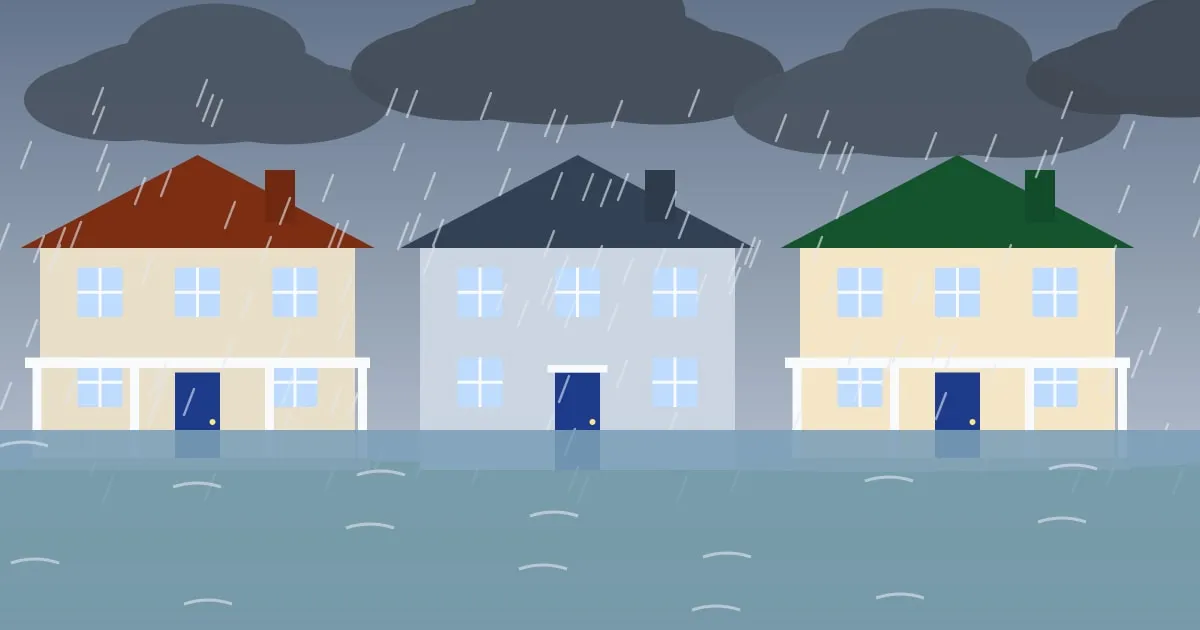
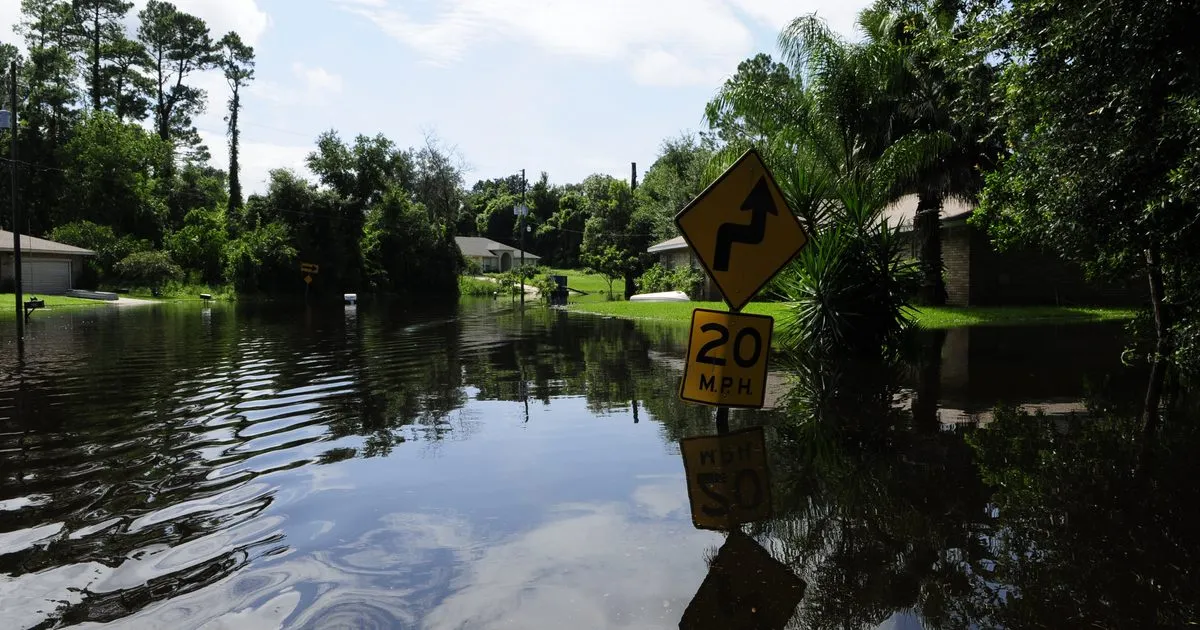
No. Every standard renters policy (the HO-4 form most insurers base theirs on) excludes flood. For insurance purposes, flood generally means water that rises or flows from outside, including:
- rivers, lakes and streams overflowing their banks;
- storm surge and tidal water;
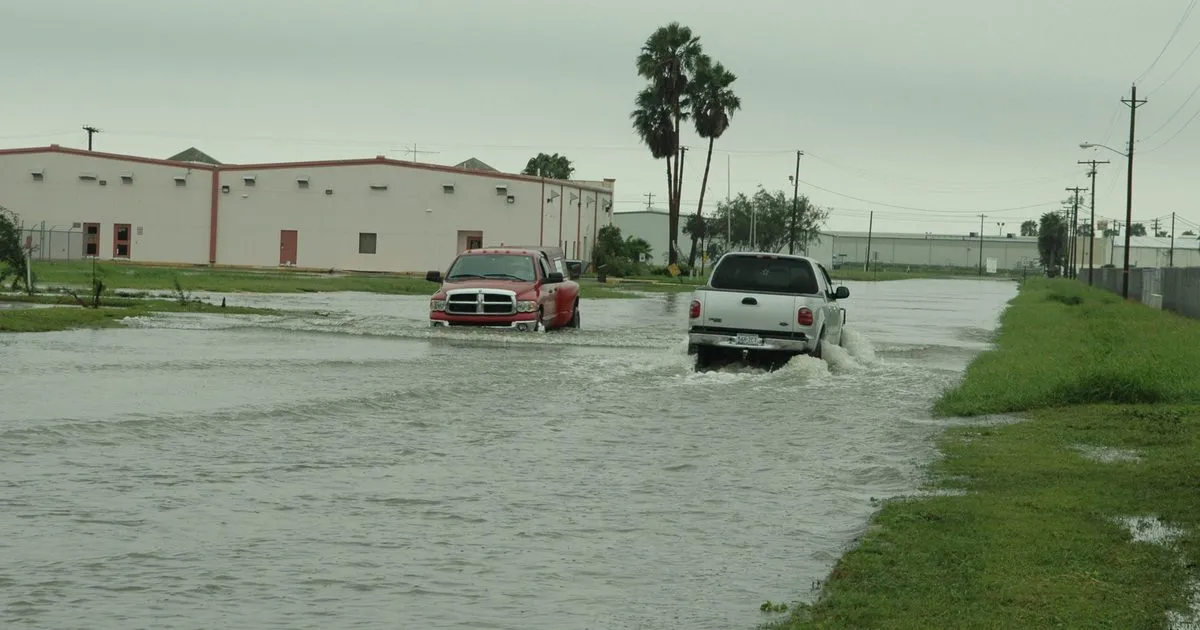
- heavy rain that pools around the building and enters from ground level;
- mudflow;
- groundwater seeping up through foundations and floors.
The National Flood Insurance Program uses a formal definition: a general and temporary condition where normally dry land is partially or completely inundated, affecting two or more acres or two or more properties. The practical meaning is the same: water that arrives from outside at ground level.
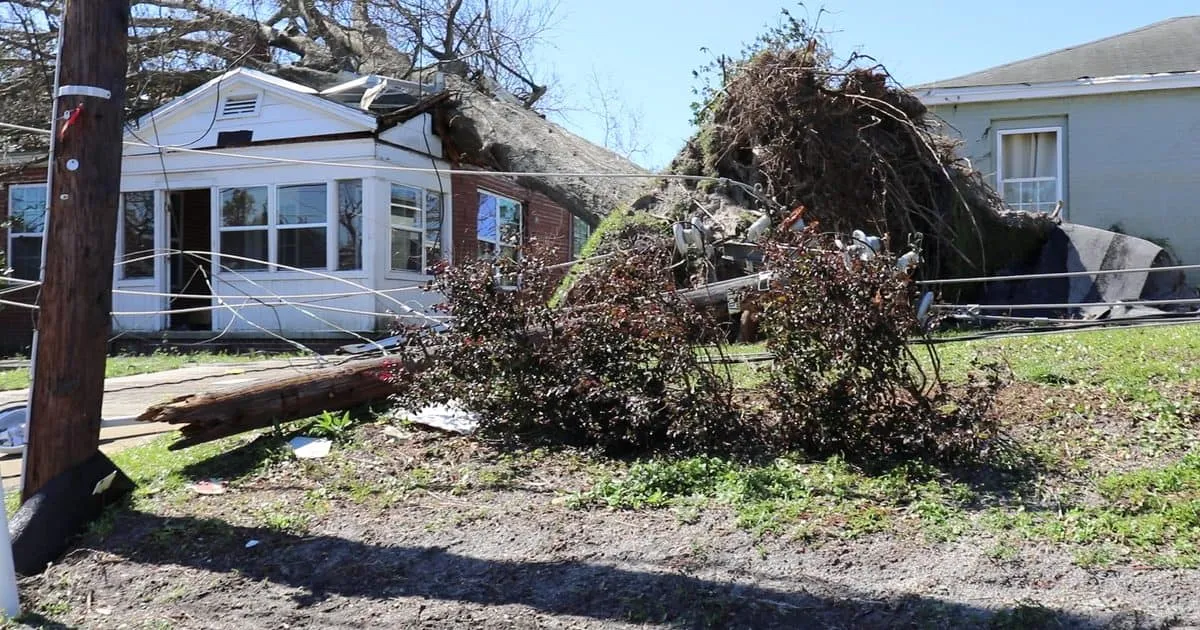
The exclusion applies no matter how the flood started. If a hurricane’s rain floods your ground-floor apartment, the flood damage is excluded, even though wind damage from the same storm might be covered.
What water damage renters insurance does cover
Renters insurance covers water that arrives suddenly and accidentally from inside the building’s systems, or from above.
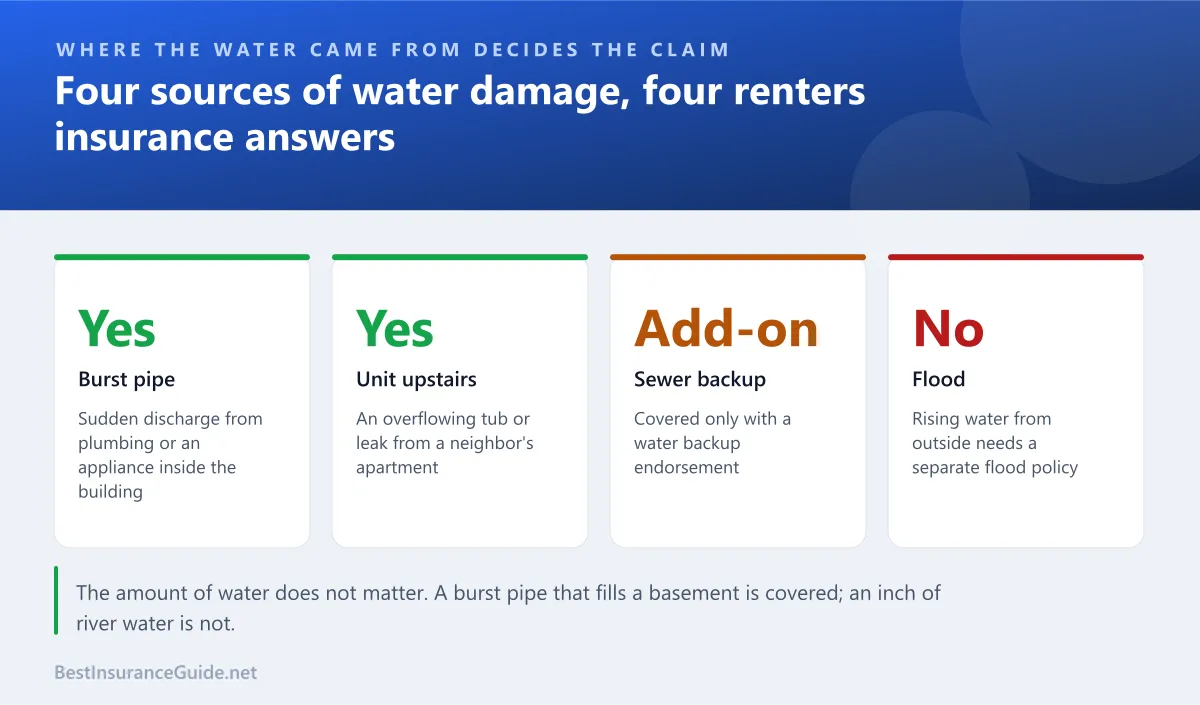
Usually covered:
- Burst or frozen pipes, as long as you did not leave the heating off in an empty apartment in winter.
- Appliance failures, such as a washing machine hose splitting or a dishwasher leaking suddenly.
- Water from the unit upstairs, such as an overflowing bathtub or burst pipe in a neighbor’s apartment.
- Water heater ruptures.
- Rain entering through storm damage, where wind or hail first breaks a window or damages the roof and rain then gets in.
- Water used to put out a fire. Our guide to renters insurance and fire damage explains why that water is covered as part of the fire claim.
Usually not covered:
- Flood, as described above.
- Sewer or drain backup, unless you add a water backup endorsement.
- Slow leaks and seepage that happen over weeks or months.
- Damage from lack of maintenance, such as a drip you knew about and did not report.
- Mold that grows from any of those. Our guide to renters insurance and mold covers the narrow circumstances where mold is paid.
For a fuller list of what a standard renters policy covers and excludes, see renters insurance covered perils.
Does renters insurance cover a flooded basement?
Flooded basements are the most common version of this question, because many renters keep a washer, dryer, freezer, storage boxes or even a bedroom below ground. The answer depends entirely on the source of the water.
| What flooded the basement | Standard renters policy | What you need |
|---|---|---|
| Burst pipe or failed water heater | Usually covered | Nothing extra |
| Washing machine or appliance leak | Usually covered | Nothing extra |
| Sewer or floor drain backup | Not covered | Water backup endorsement |
| Sump pump failure or overflow | Not covered | Water backup / sump overflow endorsement |
| Groundwater seeping through walls or floor | Not covered | Flood insurance, and even then limited |
| Heavy rain or river flooding entering from outside | Not covered | Flood insurance, and even then limited |
Two points renters often miss.
The water backup endorsement is inexpensive and often the most useful add-on for basement renters. Heavy rain can overwhelm municipal sewers and push water up through floor drains, and that is a backup, not a flood, for insurance purposes. The endorsement usually carries its own limit, commonly a few thousand dollars, so check it against what you keep downstairs.
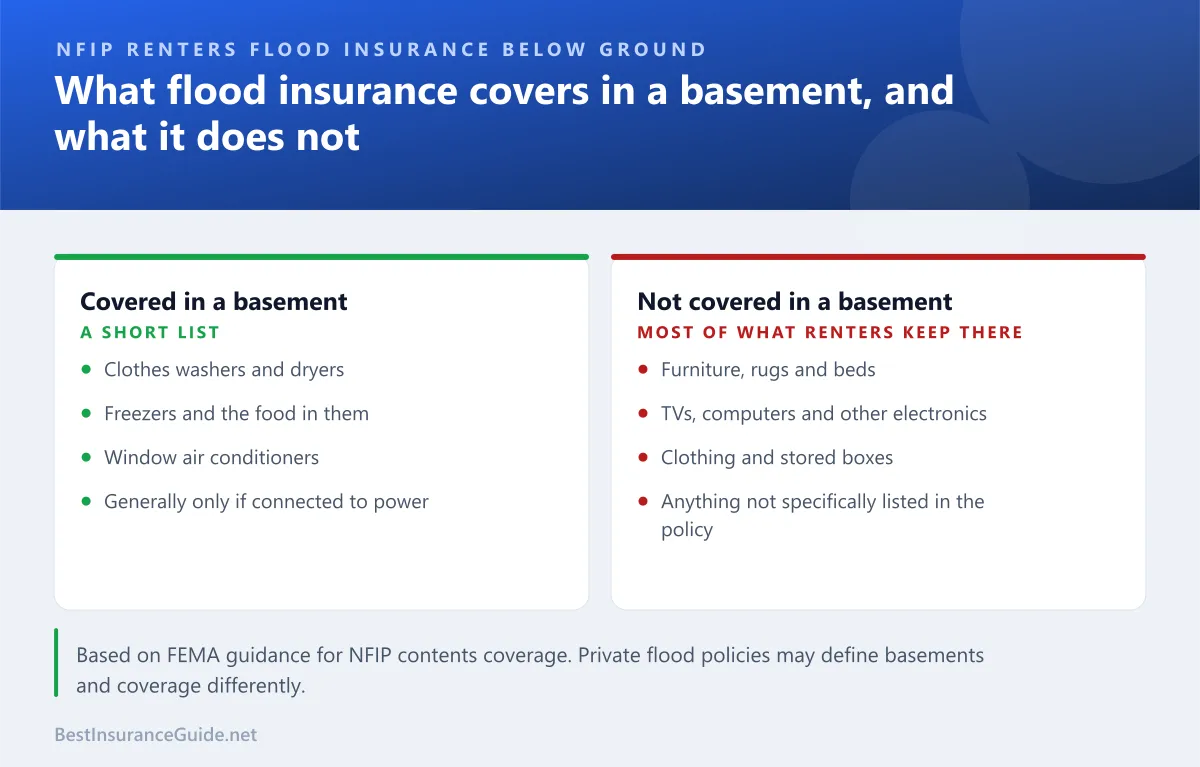
Flood insurance covers very little in a basement. Even with a flood policy, basement coverage is restricted. FEMA’s guidance is that NFIP contents coverage in a basement is limited to items such as washers, dryers, freezers and the food in them, and window air conditioners, and generally only if they are connected to power. Furniture, electronics, clothing and boxes stored in a basement are generally not covered. If you live in a basement unit, ask your flood insurer how it defines the basement before you rely on it.
Does homeowners insurance cover basement flooding?
The same rules apply to homeowners. A standard homeowners policy covers a basement flooded by a burst pipe, excludes sewer backup without an endorsement, and excludes flood and groundwater entirely. The only difference for a renter is that the building itself, including walls, flooring and the furnace, is the landlord’s responsibility to insure. Your policy only ever covers your belongings.
Your landlord’s insurance will not cover your belongings
This is one of the most persistent myths among renters. Your landlord’s property or flood insurance covers the building they own: the structure, built-in appliances they supply and fixtures. It does not cover your furniture, clothing, electronics or anything else you own, whether the damage comes from a flood or a burst pipe.
If the flooding was caused by the landlord’s negligence, such as ignoring a leaking pipe you reported, you may have a claim against the landlord. But that is a legal claim, not insurance, and it can take a long time. Our guide on whether you need renters insurance explains why relying on the landlord rarely works.
How renters can buy flood insurance
Renters can buy contents-only flood insurance. There are two main sources.
NFIP renters flood insurance
The National Flood Insurance Program, run by FEMA, sells flood policies through insurance agents and participating insurers. For renters:
- Contents coverage up to $100,000 for your personal property.
- Available to renters in communities that participate in the NFIP, whether or not you are in a high-risk flood zone.
- A 30-day waiting period from purchase in most cases.
- Claims paid at actual cash value, meaning replacement cost minus depreciation, for contents. Our guide to replacement cost versus actual cash value shows how much that can reduce a claim on older belongings.
- A separate deductible for contents.
- No coverage for living expenses if you have to move out, and limited coverage in basements.
Private flood insurance
Private flood insurers also write renters coverage, sometimes with higher limits, replacement cost settlement, shorter waiting periods or some additional living expense coverage. Availability and pricing vary widely by state and location. Some renters insurers also offer a flood endorsement on the renters policy itself in certain areas. It is worth asking your renters insurer or an agent to quote both.
The 30-day waiting period is the trap
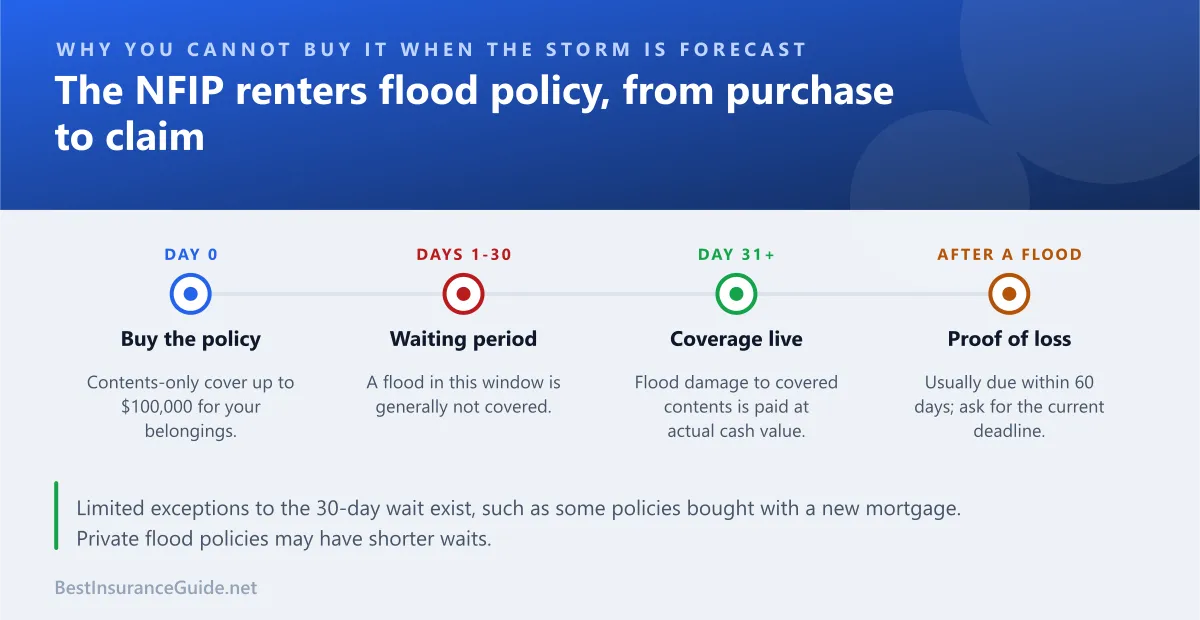
The waiting period means you cannot buy flood insurance when a storm is forecast and expect it to pay. If a hurricane is five days away, a policy bought today will not be in force when it arrives. The only time to buy flood coverage is before flood season, which means making the decision when the weather is calm.
Water backup endorsement vs flood insurance
Renters often assume one of these covers the other. They protect against different water, and many basement renters need both.
| Detail | Water backup endorsement | Flood insurance |
|---|---|---|
| What it covers | Water pushed up through drains, sewers or a failed sump pump | Rising water from outside: rivers, storm surge, pooled rainfall, mudflow |
| How you buy it | An add-on to your renters policy | A separate policy from the NFIP or a private insurer |
| Typical limit | Often a few thousand dollars | Up to $100,000 of contents with the NFIP |
| Waiting period | Usually none beyond the renters policy | Generally 30 days for NFIP policies |
| Basement contents | Covered within the endorsement limit | Very limited under NFIP rules |
A heavy rainstorm can cause either, and sometimes both at once: the street floods and the drains back up. The adjuster decides which caused which damage, so having both removes the argument.
Do renters need flood insurance?
Not every renter does. Ask yourself four questions.
- What floor do you live on? Ground-floor, garden-level and basement units are the most exposed. A tenth-floor apartment’s belongings are rarely damaged by flood, though you may still be displaced if the building floods.
- Is your area prone to flooding? Check the FEMA flood map for your address, but do not stop there. Flood maps show mapped risk, not all risk, and heavy rainfall flooding happens well outside mapped high-risk zones.
- What would it cost to replace your belongings? Add up furniture, electronics, clothing and appliances you own. For most people the total is higher than they expect.
- Could you absorb that loss? If replacing everything on your ground floor would be a financial emergency, flood coverage is worth pricing.
Contents-only flood coverage is generally far less expensive than a homeowner’s building-and-contents policy, because the insured value is lower and the building is not included. Get a quote before assuming it is unaffordable.
If your apartment floods: what to do
- Get safe first. Do not enter standing water that may be in contact with electrical outlets, and follow any evacuation orders.
- Photograph and video everything before you move or throw anything away, including water lines on walls.
- Tell your landlord in writing so that the building’s repairs and drying start as soon as possible.
- Report the claim to your renters insurer if the water came from a covered source, and to your flood insurer if you have one. If you are not sure of the source, report to both and let them determine it.
- Prevent further damage by moving undamaged belongings to a dry place and keeping receipts for any costs.
- Make a list of damaged items with approximate ages and values. Receipts, bank statements and photos help.
- Check for disaster assistance. After a federally declared disaster, FEMA may offer assistance to uninsured or underinsured renters. It is not a substitute for insurance and usually covers far less than a policy would. Our guide to FEMA disaster assistance explains who qualifies and how to apply.
For NFIP policies, FEMA generally requires a signed proof of loss within a set period after the flood, commonly 60 days, although it may extend that deadline after large disasters. Ask your insurer for the current deadline as soon as you report.
Related reading
Not in a high-risk flood zone? Nearly a third of flood claims come from outside them. See flood zone X and flood insurance.
The bottom line
Renters insurance covers sudden water damage from inside the building, such as a burst pipe or a leak from upstairs, but it does not cover flood damage, groundwater, or a sewer backup without an endorsement. For a flooded basement, the source of the water decides everything, and even flood insurance covers only limited items below ground.
If you live on a low floor or anywhere heavy rain can pool, price two things before the next storm season: a water backup endorsement on your renters policy, and a contents-only flood policy with its 30-day wait in mind. Our renters insurance guide covers the rest of what a good renters policy should include.
BestInsuranceGuide.net is an independent publisher and is not affiliated with FEMA, the NFIP or any insurer. Coverage details are based on standard policy forms and FEMA’s published guidance; your policy wording and state rules decide your actual coverage.