FEMA Disaster Assistance: Who Qualifies, What It Pays and How It Works With Insurance
How FEMA disaster assistance works: grants up to $44,800 for housing and other needs, who qualifies, how to apply, and why you file with insurance first.

Table of contents
FEMA disaster assistance is money from the federal government to help people recover after a major disaster, but it is designed to fill the gaps insurance leaves, not to replace insurance. Grants can pay for a place to stay, basic repairs to make your home livable, and essentials you lost. They don’t have to be repaid. But the amounts are capped, they only open up after a specific kind of federal declaration, and FEMA won’t pay for anything your insurer covers.
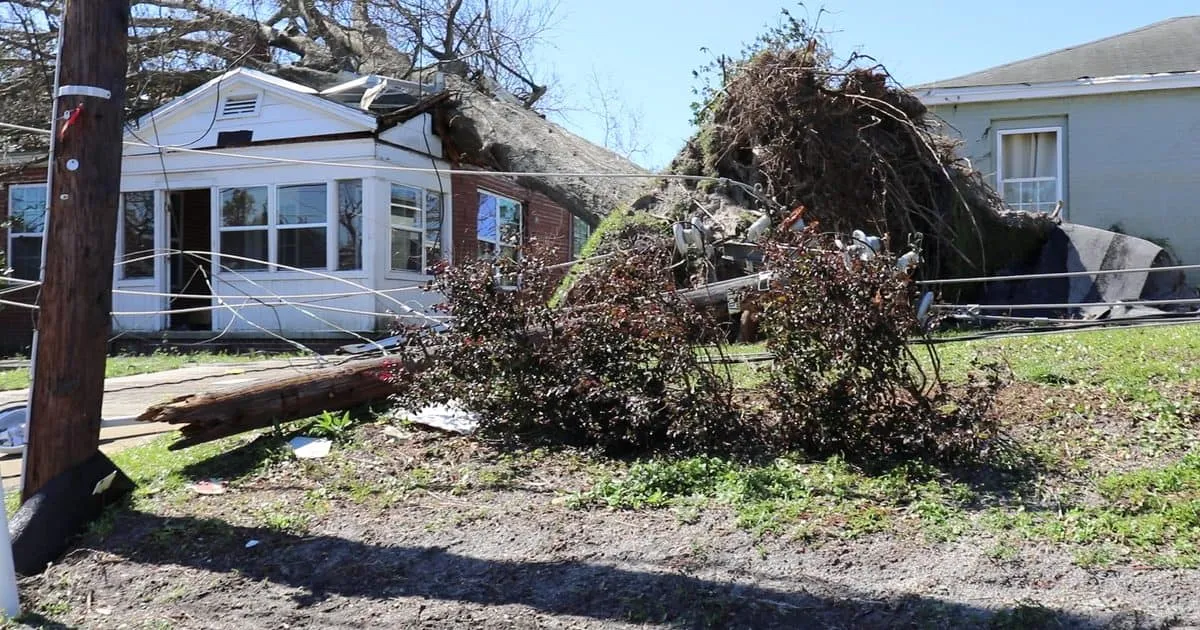
Hurricane Isaias made landfall near Destin, Florida, on October 9, 2026. Remnants of Rachel flooded parts of Southern California and Las Vegas the same weekend. Many people are now asking whether FEMA will help and how it fits with their insurance claim. This guide explains how the program works, who qualifies, how to apply and how to coordinate it with your policy.
This site is independent and not affiliated with FEMA or any government agency.
Hurricane Isaias: where things stand
Updated October 14, 2026.
- Florida, Alabama and Georgia have federal emergency declarations for Isaias. In Florida that covers 27 counties, including Escambia, Santa Rosa, Okaloosa, Walton, Bay and Leon. In Alabama it covers Baldwin, Escambia and Mobile counties.
- These are emergency declarations, not major disaster declarations with Individual Assistance. They fund emergency response by state and local governments. Households can’t yet apply for FEMA grants for repairs, rent or lost belongings.
- Individual Assistance comes only if the President approves a major disaster declaration that includes Individual Assistance for your county. That usually follows joint damage assessments by FEMA and the state.
What to do now: document your damage, make temporary repairs to prevent further damage, keep receipts, and file your insurance claims. If Individual Assistance is approved, register with FEMA straight away. You can track declarations at fema.gov/disaster.
What is FEMA?
The Federal Emergency Management Agency is part of the Department of Homeland Security. It coordinates the federal response to disasters and runs the National Flood Insurance Program (NFIP). Most people meet it through its Individuals and Households Program (IHP), the grants that go directly to survivors.
FEMA’s role is under review. A presidential FEMA Review Council recommended major changes in May 2026, including replacing today’s system of grant categories with a single payment. The biggest changes would need an act of Congress. For now, the program described here is the one in effect.
Emergency declaration vs major disaster declaration
This distinction confuses many people after a storm:
| Emergency declaration | Major disaster declaration | |
|---|---|---|
| What it’s for | Immediate response: debris removal, shelters, protective measures | Long-term recovery |
| Who gets money | Mainly state, local and tribal governments | Governments and, if Individual Assistance is included, households |
| Can you apply for home repair or rent grants? | No | Yes, if your county is designated for Individual Assistance |
A major disaster declaration lists the specific counties and types of assistance approved. Being near a disaster isn’t enough. Your county must be designated for Individual Assistance.
What FEMA assistance pays for
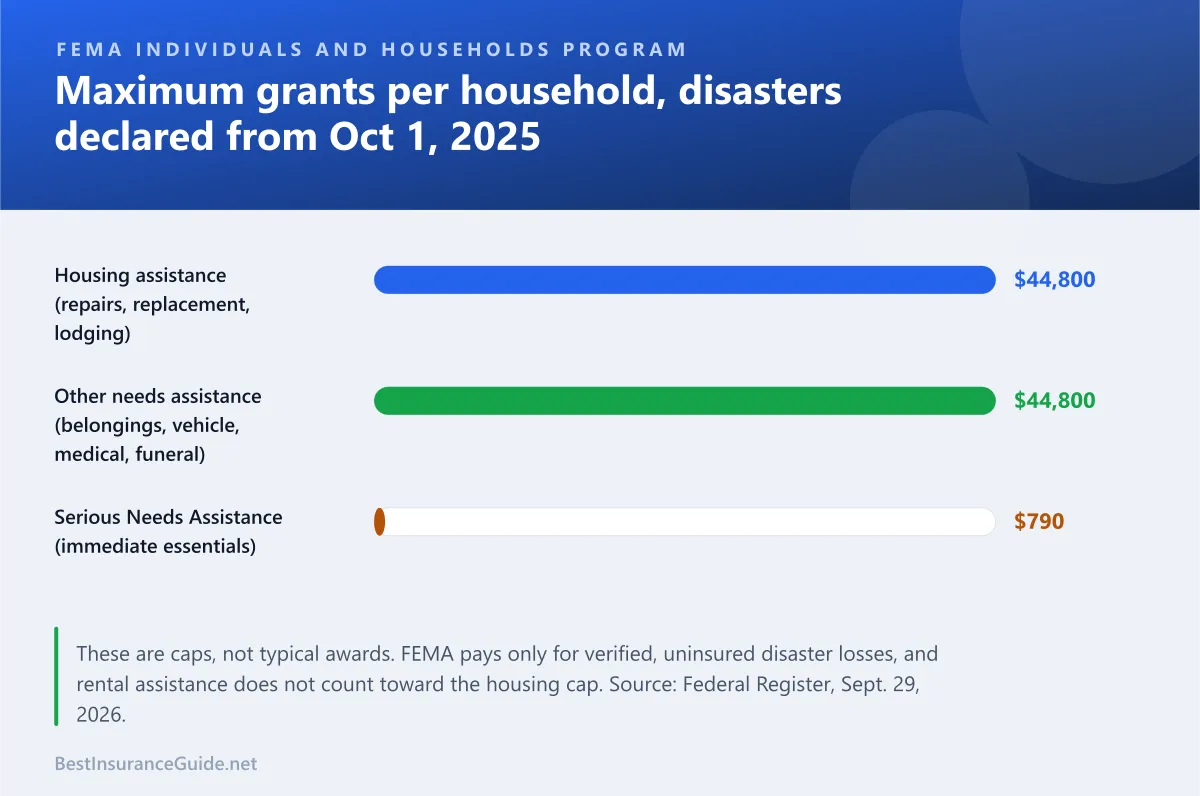
For disasters declared on or after October 1, 2025, the IHP maximums are $44,800 for housing assistance and $44,800 for other needs assistance per household, according to FEMA’s notice in the Federal Register. The caps are adjusted each year for inflation. Rental assistance and accessibility-related repairs don’t count toward the housing cap.
Housing assistance
- Rental assistance: money to rent somewhere else while your home is unlivable.
- Lodging reimbursement: hotel costs during the disaster period, if insurance doesn’t cover them.
- Home repair: money to make an owner-occupied primary residence safe, sanitary and functional. It pays for basics such as the roof, windows, essential utilities and structural parts. It does not restore the home to how it was before.
- Home replacement: help toward replacing a home that was destroyed, within the cap.
- Direct housing: temporary housing units, approved only when rental housing isn’t available.
- Displacement Assistance: upfront money for immediate housing needs if you can’t return home, such as a hotel or staying with family while you find a rental.
Other needs assistance
- Serious Needs Assistance, now $790: quick money for essentials such as food, water, baby formula, medication and emergency supplies.
- Personal property: replacing essential furniture, appliances, clothing and work tools.
- Transportation: repairing or replacing a vehicle damaged in the disaster, if it’s your only one and isn’t covered by insurance.
- Medical and dental expenses caused by the disaster.
- Funeral expenses for a disaster-related death.
- Childcare, moving and storage, and some cleanup items.
Most households receive far less than the maximum. FEMA pays only for verified, uninsured, disaster-caused losses, and home repair grants cover the basics, not a full rebuild.
Who qualifies for FEMA assistance
You generally qualify if all of these apply:
- Your county is designated for Individual Assistance in a major disaster declaration.
- The damaged home is your primary residence, where you live more than six months of the year. Second homes and vacation rentals aren’t eligible.
- The losses aren’t covered by insurance or another source.
- Someone in your household is a U.S. citizen, non-citizen national or qualified non-citizen. A parent can apply on behalf of a citizen child.
- You can verify your identity, and occupancy or ownership for home repair grants.
Renters qualify too. A renter can’t get money to repair the building, but can get rental assistance, personal property help and other needs assistance.
FEMA and insurance: file with your insurer first
This is the part most people get wrong. Federal law bars FEMA from paying for a loss that has already been paid, called a duplication of benefits. So FEMA comes after insurance:
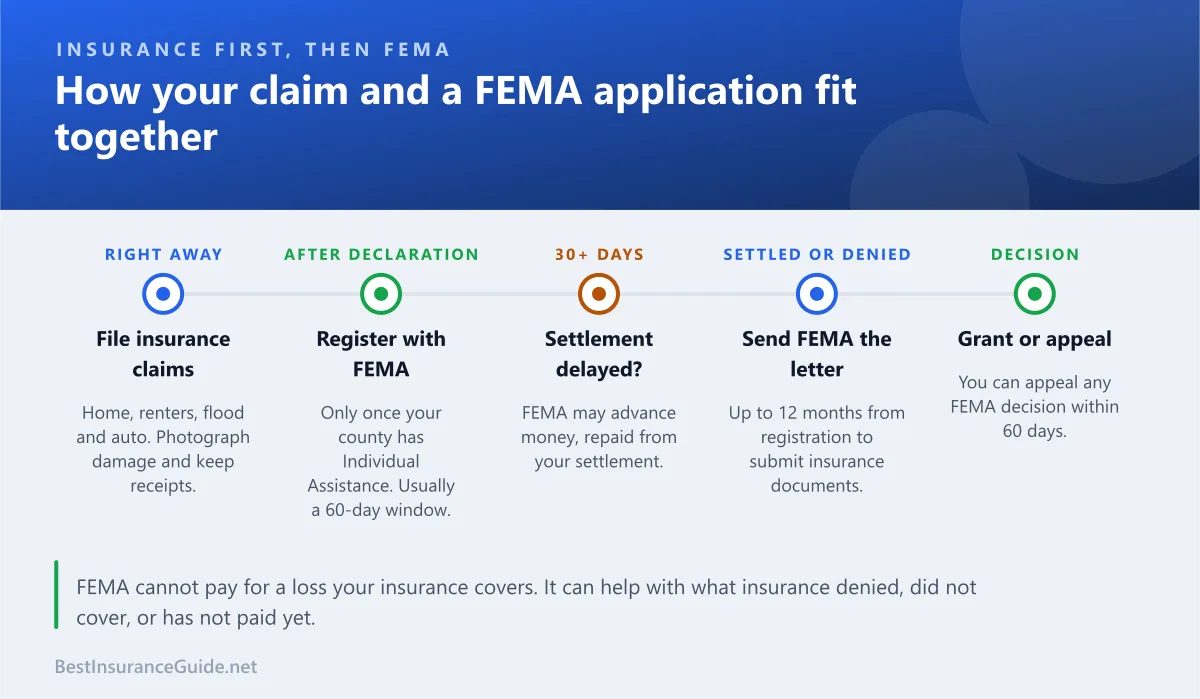
- File your insurance claim right away, for home, renters, flood and auto as applicable.
- Apply to FEMA at the same time once Individual Assistance is declared. Don’t wait for your settlement, because the FEMA registration window is limited.
- FEMA may ask for your insurance documents. Send your settlement or denial letter. FEMA asks that you send it within 60 days of the date on its letter, and you have up to 12 months from your registration to submit insurance information.
- FEMA reviews what insurance didn’t cover and may provide a grant for eligible, uninsured needs.
When FEMA can still help insured households
- Your claim was denied, including a denial because the damage was below your deductible. Send FEMA the denial letter.
- You’re underinsured. Your settlement didn’t cover the cost of making the home livable.
- Your settlement is delayed. If it’s been 30 days or more since you filed and you’ve received nothing, contact FEMA. It may give you an insurance advance, which you repay from your settlement.
- You’ve used up your additional living expenses (ALE) or loss-of-use coverage, or you didn’t have it.
The flood insurance gap
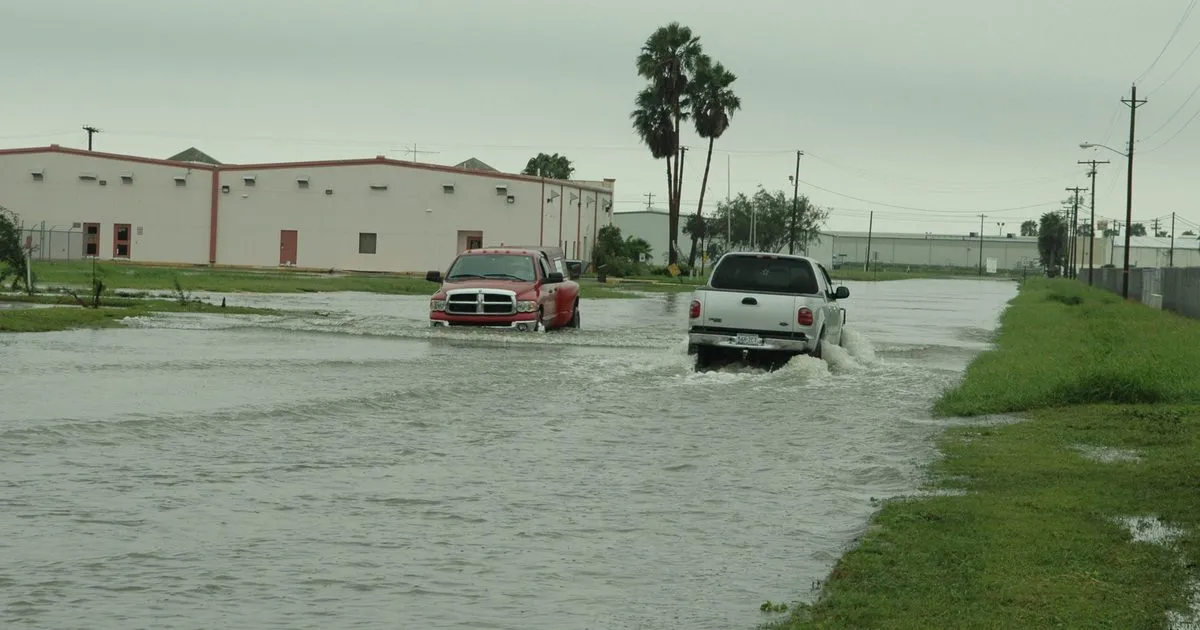
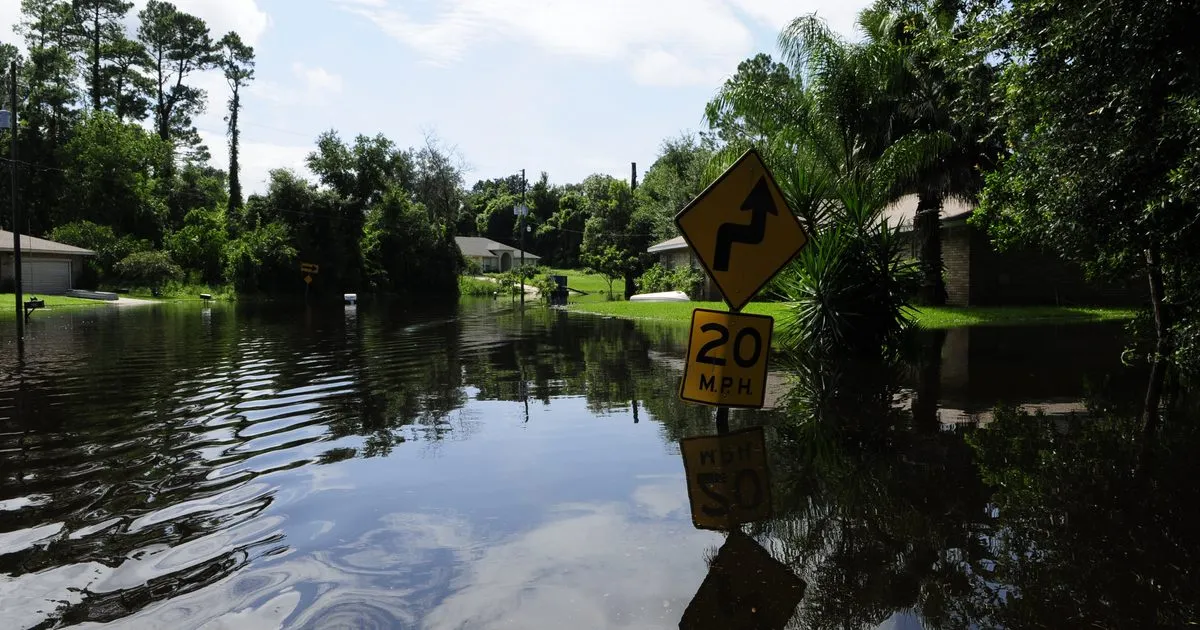
Standard homeowners and renters policies don’t cover flooding, including storm surge. After a hurricane, many homeowners find that their policy pays for wind damage to the roof but not for water that came in at ground level. Flood damage is covered only by a flood policy, through the NFIP or a private insurer.
Without one, FEMA grants may be your only help with flood damage, and they’re capped and limited to basic repairs. If you receive FEMA help for flood damage in a high-risk flood zone, you may be required to buy and keep flood insurance to be eligible for help in a future flood. Our guides to whether homeowners insurance covers hurricane damage and whether you need flood insurance go deeper. Renters can read does renters insurance cover flood damage?, and if a vehicle was flooded, see does car insurance cover flood damage?
How to apply for FEMA disaster assistance
Once your county is designated for Individual Assistance, you can apply:
- Online at DisasterAssistance.gov;
- through the FEMA app;
- by phone on the FEMA Helpline: 800-621-3362. If you use a relay service, give FEMA the number for that service;
- in person at a Disaster Recovery Center, once centers open in your area.
The application period is usually 60 days from the declaration and is sometimes extended. Apply as early as you can.
Have this ready
- Social Security number for at least one household member
- Address of the damaged home and a current address and phone number
- Insurance details: company names and policy numbers
- A description of the damage and losses
- Household income
- Bank account and routing numbers for direct deposit
What happens next
- You get a registration number. Keep it, along with every letter FEMA sends.
- FEMA may schedule a home inspection, often within days, sometimes by phone or video. Make sure your phone accepts calls from unknown numbers.
- You receive a determination letter explaining what you were approved for, or why not.
- Approved money usually arrives by direct deposit.
If FEMA says no
A denial is often a request for more information, not a final answer. Common reasons include missing insurance documents, unverified identity or occupancy, and “insufficient damage” findings.
- Read the letter carefully. It tells you exactly what’s missing.
- Appeal within 60 days of the date on the letter. You can appeal each decision FEMA makes, and you should include new documents.
- Helpful documents: contractor estimates, photos, receipts, utility bills or a lease to prove occupancy, and your insurance settlement or denial letter.
SBA disaster loans: the other half of federal help
The U.S. Small Business Administration makes low-interest disaster loans to homeowners and renters, not only to businesses, after a declaration that includes them. Typical limits are up to $500,000 to repair or replace a primary home, and up to $100,000 for personal property, including vehicles. Rates for people who can’t get credit elsewhere are capped at 4%, with terms up to 30 years.
Since March 2024, you don’t have to apply for an SBA loan to be considered for FEMA grants. But an SBA loan can cover far more than FEMA’s caps, so it’s worth looking at if your insurance falls short.
Is FEMA money taxable?
No. FEMA disaster grants aren’t taxable income and don’t affect Social Security, Medicaid or SNAP benefits. You also don’t have to repay a grant, unless insurance later pays for the same loss or you received an insurance advance.
Protect yourself from disaster scams
Scammers follow storms. Remember:
- FEMA never charges to apply, and FEMA inspectors never ask for money.
- Inspectors and staff carry federal photo ID. Ask to see it.
- Be wary of contractors who demand large upfront payments or pressure you to sign over insurance benefits.
- Report suspected fraud to the FEMA Helpline or the DHS Office of Inspector General.
Your post-storm checklist
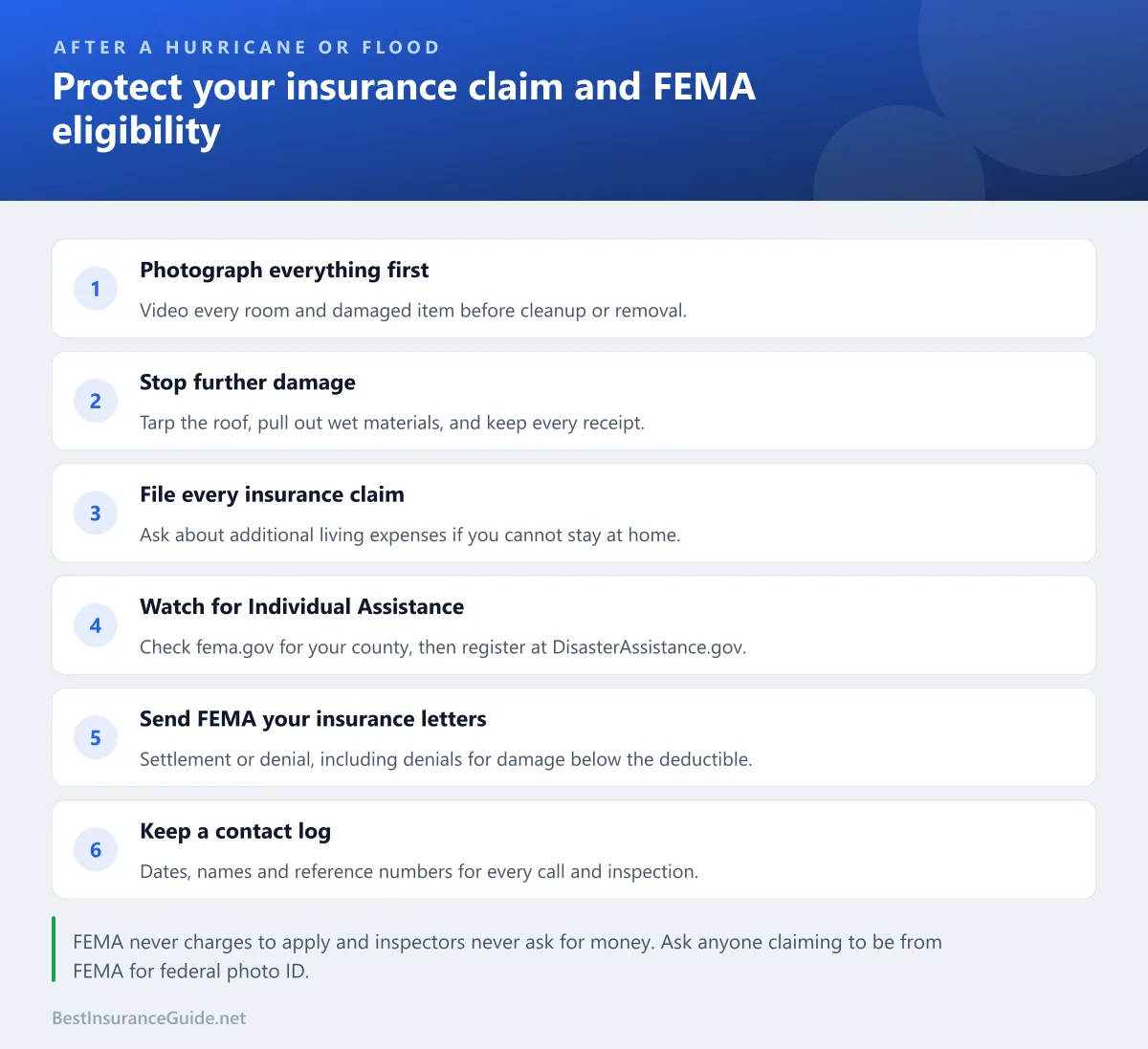
- Stay safe. Don’t enter a damaged home until it’s safe.
- Photograph and video everything before you clean up or throw anything away.
- Prevent further damage, for example with tarps and by removing wet materials, and keep the receipts. Insurers expect reasonable steps to limit damage.
- File insurance claims promptly. Ask about additional living expenses if you can’t stay at home.
- Watch for an Individual Assistance declaration for your county, then register with FEMA.
- Send FEMA your insurance settlement or denial as soon as you get it.
- Keep a log of every call, inspection and letter, from your insurer and from FEMA.
If your insurer denies part of your claim, our guide to what to do when an insurance claim is denied explains appeals and complaints.
Related reading
- Does homeowners insurance cover hurricane damage? covers wind, surge and hurricane deductibles.
- Flood zone X and flood insurance explains why low-risk zones still flood.
- Replacement cost vs actual cash value explains how your settlement is calculated.
Sources and notes
- FEMA notice of maximum IHP assistance, Federal Register, September 29, 2026: $44,800 housing and $44,800 other needs assistance for disasters declared on or after October 1, 2025.
- FEMA notice on Serious Needs Assistance, Federal Register, September 29, 2026: $790.
- FEMA: Individuals and Households Program and the 2024 Individual Assistance reforms.
- FEMA: Assistance for survivors with insurance coverage: denials, delays, insurance advances and the 60-day document request.
- FEMA: Myths vs facts: grants, taxes, benefits and appeals.
- FEMA press release, October 9, 2026: the Florida emergency declaration for Hurricane Isaias.
- SBA disaster assistance: home and personal property loan limits and terms.
This article is general information, not legal advice. FEMA programs, amounts and declarations change. Always check DisasterAssistance.gov and the declaration for your county.