Does Car Insurance Cover Flood Damage? What to Do If Your Car Was in a Flood After Hurricane Isaias
Flooded car after Hurricane Isaias? Car insurance covers flood damage only with comprehensive. What to do first, total loss vs repair, claim payouts, and how to tell if a used car was flooded.

Table of contents
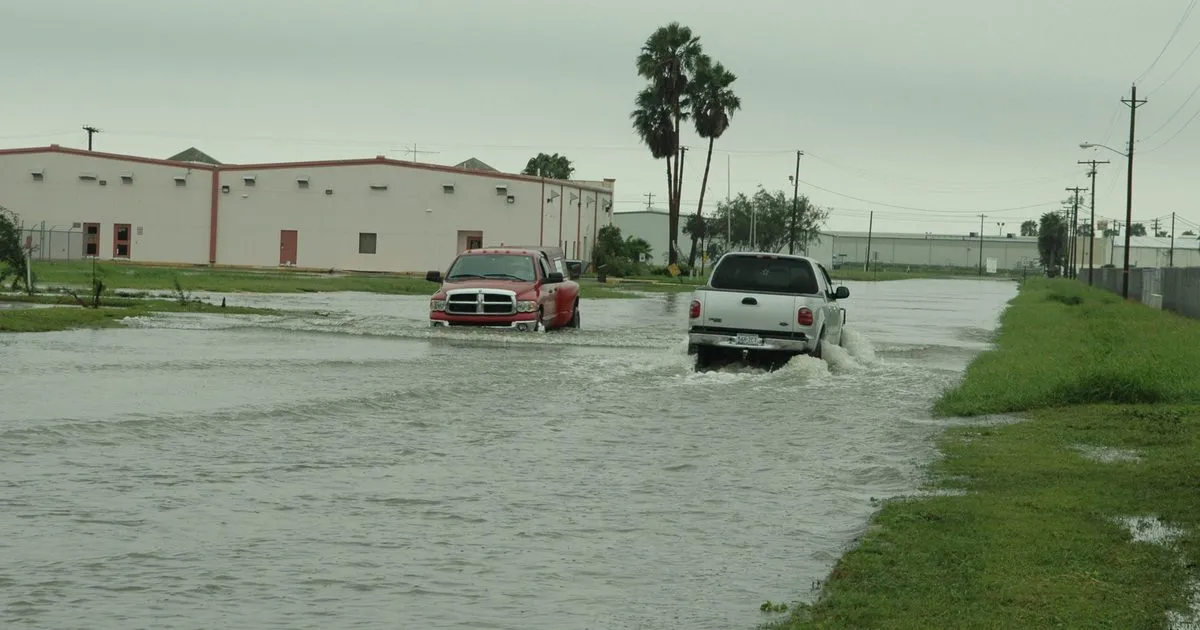
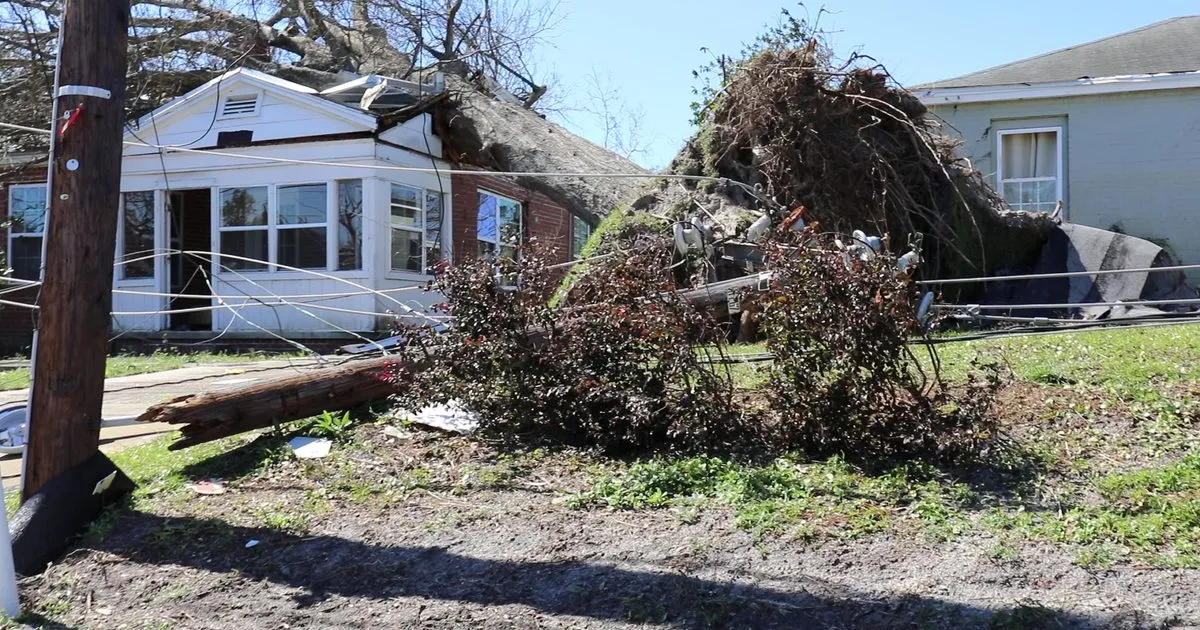
Hurricane Isaias is forecast to dump 4 to 6 inches of rain, and up to a foot in places, along the central Gulf Coast this weekend, on top of 5 to 7 feet of storm surge near the coast. If the forecasts hold, thousands of cars from Louisiana to the Florida Panhandle will end up sitting in water. Every big storm brings the same question: does car insurance cover flood damage?
Yes, but only if you have comprehensive coverage. If your policy is liability-only, the flood damage is yours to pay. This guide covers who is covered, what to do the moment you find your car in water, how insurers decide between repairing a flood-damaged car and writing it off, and, for anyone buying a used car in the coming months, how to tell if a car has been flooded.
This site is independent and not affiliated with any insurer. Storm details are as of the National Hurricane Center’s advisory on the evening of October 7, 2026.
Does car insurance cover flood damage? Depends on your coverage
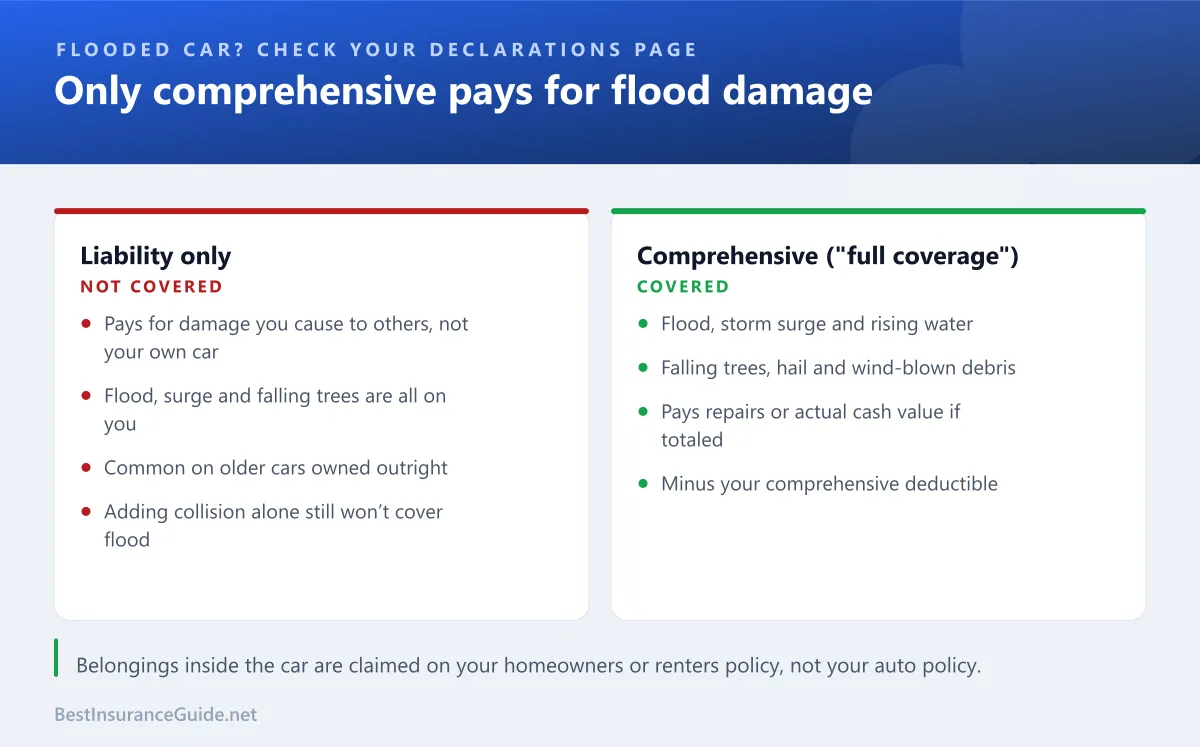
| Your auto coverage | Flood damage to your car | Falling tree or hail | Your belongings inside the car |
|---|---|---|---|
| Liability only | Not covered | Not covered | Not covered by auto |
| Liability + collision | Not covered | Not covered | Not covered by auto |
| Comprehensive (“full coverage”) | Covered, minus deductible | Covered | Not covered by auto |
| Homeowners or renters policy | Not covered | n/a | Usually covered (personal property) |
Comprehensive coverage is what pays
Comprehensive covers damage that isn’t a crash: theft, fire, falling objects, hail, animals, and flood, including storm surge and rising water. It pays the cost to repair your car, or its actual cash value if it is totaled, minus your comprehensive deductible. See comprehensive deductibles explained.
If you have a car loan or lease, your lender almost certainly requires comprehensive, so most financed cars are covered. Older cars that are owned outright are the ones most often left on liability-only, and those are the ones that turn into uninsured losses after a hurricane.
Does full coverage car insurance cover flood damage?
“Full coverage” isn’t a legal term, but it usually means liability + collision + comprehensive. So yes: the comprehensive piece covers flooding.
Can I add comprehensive before Isaias?
Probably not. Like home insurers, auto insurers impose binding restrictions when a hurricane threatens. They stop adding comprehensive or lowering deductibles for vehicles in the warning area until the storm passes. Check with your insurer, but plan on the coverage you have today being the coverage you have for this storm.
Will insurance cover a flooded car if you drove into the water?
Usually, yes, under comprehensive, because water is the cause of the damage. But this is the one situation where insurance is the least of your worries. The National Weather Service warns that 12 inches of moving water can float many cars and 2 feet can sweep most vehicles away, and flooded roads may have washed out underneath. Turn around, don’t drown. No claim is worth it.
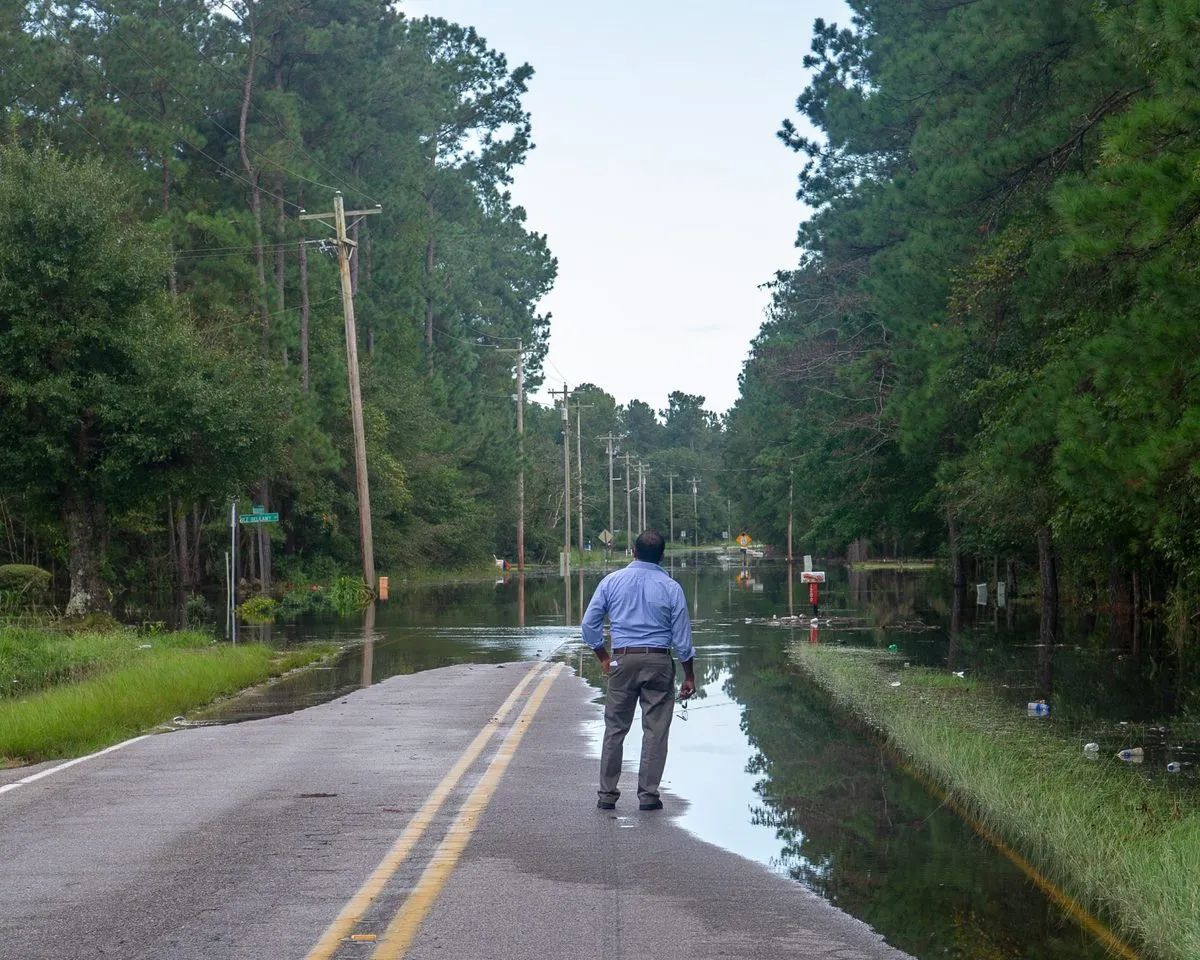 A resident watches floodwater rise over a road in Bucksport, South Carolina, after Hurricane Florence, September 2018. Photo: South Carolina National Guard (public domain).
If your car stalls in flood water, don’t restart it. Get yourself out if the water is rising, and call for help.
What to do if your car was in a flood
The first few hours matter more than most people think. One wrong move, usually trying to start the engine, can turn a repairable car into a write-off.
- Don’t start it. If water got into the engine’s air intake, cranking it can cause hydrolock: water in the cylinders that bends connecting rods and destroys the engine.
- Photograph the water line, inside and out: on the door panels, seats, dashboard and engine bay. The height the water reached is the single biggest factor in the adjuster’s decision.
- Disconnect the battery if you can do it safely, to limit electrical shorts.
- Report the claim right away. After a big storm, insurers get flooded with claims too. The earlier you’re in the queue, the sooner an adjuster sees your car.
- Get it towed, not driven, to a repair shop or wherever your insurer directs. Many insurers set up drive-in or tow-in catastrophe claim sites after hurricanes.
- Start drying it, if your insurer agrees: open the doors and windows, pull up wet floor mats and use fans. Mold can set in within a couple of days in Gulf Coast heat.
- Take out valuables and documents. Remember that belongings inside the car are claimed on your homeowners or renters policy, not your auto policy.
- Check your rental coverage. Rental reimbursement pays for a rental car only if you added it to your policy.
Is a flood-damaged car repairable or a total loss?
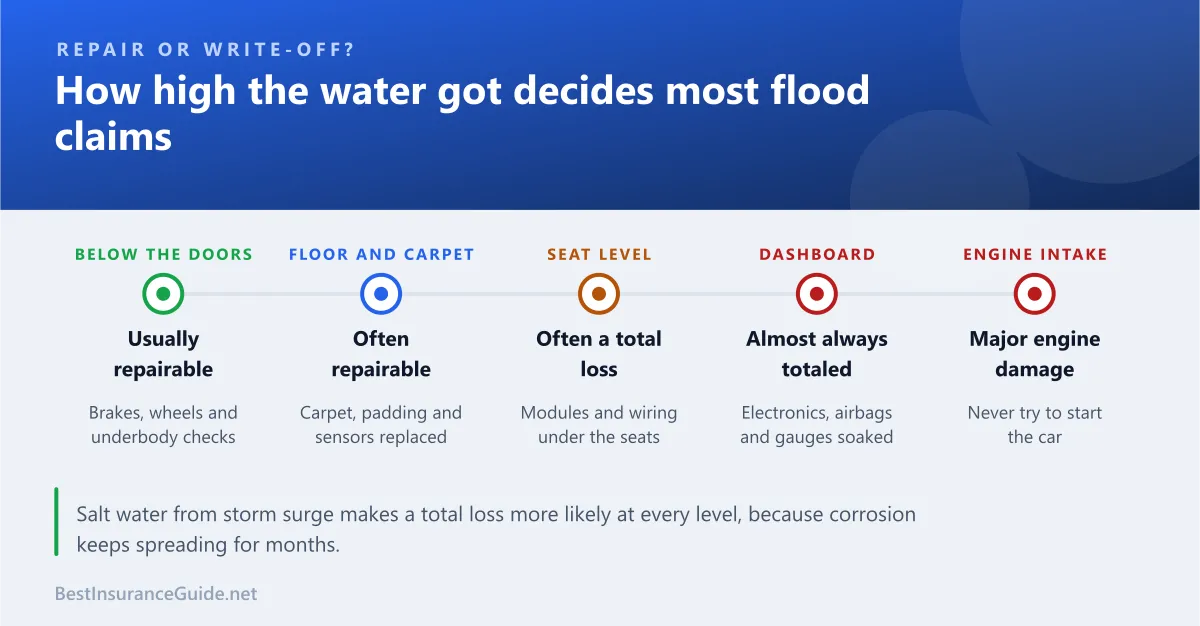
Insurers look at three things: how high the water got, what kind of water it was, and how long the car sat in it.
- Water below the floor or just reaching the carpet, fresh water, quickly drained: often repairable. Carpets, padding and some sensors may need replacing.
- Water over the seats or up to the dashboard: often a total loss. Modern cars carry dozens of electronic modules and wiring harnesses under the seats and dash, and replacing them can cost more than the car is worth.
- Salt water, such as storm surge: corrosion spreads for months. Many insurers total salt-water cars that look repairable today.
- Water in the engine or transmission: major repairs, often a total loss.
When does an insurer declare a total loss? Generally when repair costs plus the car’s salvage value exceed its actual cash value, or when they cross a state total-loss threshold. Florida, for example, uses 80% of the car’s value, and Alabama uses 75%. After a hurricane, insurers tend to total flood cars aggressively because hidden electrical problems are so common.
How much will insurance pay for a flooded car?
If it is totaled, you get the car’s actual cash value (ACV), its market value just before the flood, minus your comprehensive deductible. If you still owe money on a loan, the payment goes to your lender first.
Example. Your 2019 SUV has an ACV of $21,000. You have a $500 comprehensive deductible and owe $24,000 on the loan.
| Amount | |
|---|---|
| Actual cash value | $21,000 |
| Minus comprehensive deductible | −$500 |
| Insurance payment (to the lender) | $20,500 |
| Still owed on the loan | $3,500 |
| With gap insurance | Gap pays the $3,500 shortfall (deductible rules vary) |
If you are upside down on your loan, this is where gap insurance earns its keep. If you think the ACV offer is too low, ask for the valuation report and the comparable vehicles used. You can push back with your own comparables from local listings.
How to tell if a car has been flooded
This matters long after the water goes down. After major hurricanes, thousands of flood-damaged cars are cleaned up and resold, sometimes in other states, where a flood or salvage brand on the title can be “washed” off through re-registration. If you’re buying a used car in the next year, assume flood cars are in circulation.
Warning signs of a flooded car:
- A musty smell, or a strong air freshener smell covering something up.
- New carpet or upholstery in an older car, or damp, mismatched or stained carpet.
- Silt, sand or mud under the seats, in the trunk’s spare tire well, or in the seat tracks.
- Rust on seat brackets, screws under the dashboard and pedal assemblies, where you would not normally see it.
- Fogged headlights or taillights, or a water line in the gauge cluster.
- Electrical gremlins: flickering lights, warning lights, failing windows or locks.
Protect yourself:
- Run the VIN through the free National Insurance Crime Bureau (NICB) VINCheck, which flags cars reported as salvage or total losses by participating insurers.
- Get a vehicle history report and check for a flood, salvage or rebuilt title, and for recent registrations in a hurricane-hit state.
- Have an independent mechanic inspect the car before you buy.
- Be wary of “flooded cars for sale” listings with suspiciously low prices and no clear history. Flood cars can be sold legally with a branded title, but the buyer has to know.
Can you insure a flood-damaged car?
If the car was totaled and given a salvage title, it usually can’t be registered or driven until it is repaired, passes a state inspection and gets a rebuilt title. After that:
- Liability coverage is usually easy to get.
- Comprehensive and collision can be harder. Some insurers decline rebuilt titles, and others require an inspection and photos. Payouts on a rebuilt-title car are typically lower because the market value is lower.
If you keep a flooded car that the insurer offered to total (an “owner-retained salvage”), you’ll get the ACV minus the deductible and minus the salvage value, and your title will usually be branded. Think carefully: corrosion and electrical problems can surface months later.
Will a flood claim raise my car insurance?
A comprehensive claim for flood or storm damage is not an at-fault accident, so it usually affects your premium far less than a crash you caused. Many insurers don’t surcharge individual policyholders for weather claims at all, and some states limit surcharges for not-at-fault losses. The catch is that a bad storm season can push up comprehensive rates for everyone in the region at renewal, whether or not you filed. Don’t skip a legitimate flood claim to protect your rate. A totaled car is exactly what comprehensive is for.
Leased cars and company cars
- Leased car: the leasing company requires comprehensive, so you are almost certainly covered. The payout goes to the lessor. Gap coverage is often built into the lease, so check your contract for any remaining balance.
- Company car: the employer’s commercial auto policy usually covers it. Report the damage to your employer straight away.
- Rideshare or delivery car: your personal comprehensive coverage normally applies to weather damage while the car is parked. Check any rideshare endorsement for details.
Before the next storm: a quick coverage check
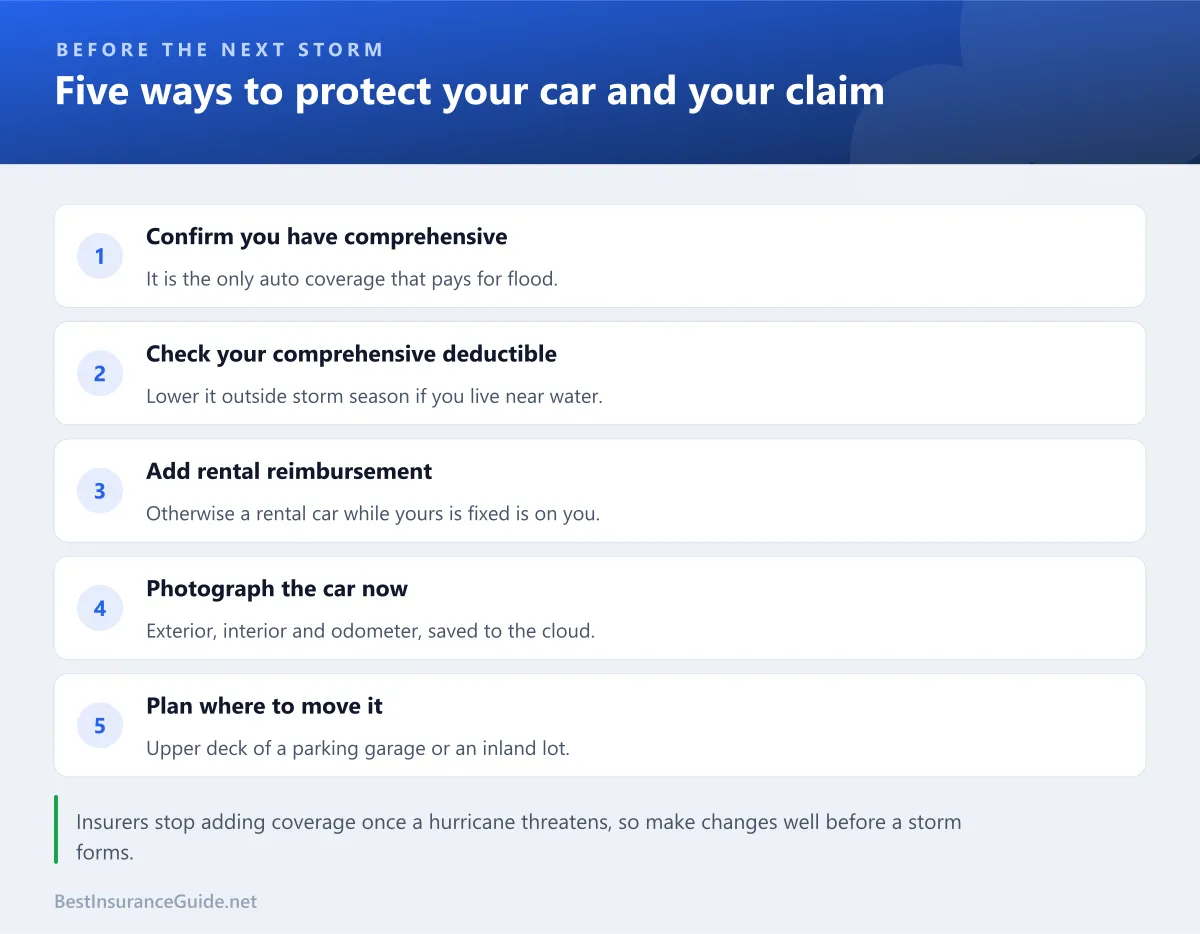
- Check your declarations page for comprehensive and its deductible.
- Consider a lower comprehensive deductible if you live in a flood-prone area. It is often cheap to change, outside of storm season.
- Add rental reimbursement if you depend on one car.
- Keep photos of the car, including the odometer and interior, saved in the cloud.
- Know your high ground. Parking garages, upper floors of parking decks and inland lots can save the car.
Related reading
Does homeowners insurance cover hurricane damage? covers your home and belongings, hurricane deductibles and claims. Gap insurance explained shows when it pays, and insurance claim denied? explains your options if a flood claim goes badly. For damage to your belongings, see Florida renters insurance and hurricane coverage.
Sources and notes
- National Hurricane Center forecasts for Hurricane Isaias, as reported by WJHG and Insurance Journal, October 7–8, 2026.
- National Weather Service, “Turn Around Don’t Drown” flood safety guidance (water depth and vehicles).
- National Insurance Crime Bureau, VINCheck service and flood vehicle guidance.
- State total-loss thresholds: Florida Statutes §319.30 (80%); Alabama Code §32-8-87 (75%).
- Photos: Barry Bahler, FEMA (featured); South Carolina National Guard (in-body). Both public domain, via Wikimedia Commons.
This article is general information, not insurance or legal advice. Coverage and total-loss rules depend on your policy and state. Contact your insurer about your own claim.