Event Planner Insurance: The Policies Planners, Vendors and Hosts Need
Event planner insurance: the policies planners need, one-day event liability for hosts and vendors, and the coverage venues require.

Table of contents

An event can go wrong in two very different ways. A guest trips over a cable, a decoration falls, a table collapses: that is physical harm. Or the planner books the wrong date, a chosen caterer never arrives, the budget was miscalculated: that is financial harm. Event planners are exposed to both, and different policies cover each.
Event planner insurance is the package of policies that covers those risks, and venues increasingly will not let a planner, vendor or host through the door without proof of it. This guide explains what event planning insurance covers, which policies planners and wedding planners need, how one-day event insurance works for hosts and vendors, and what venues ask for.
What insurance does an event planner need?
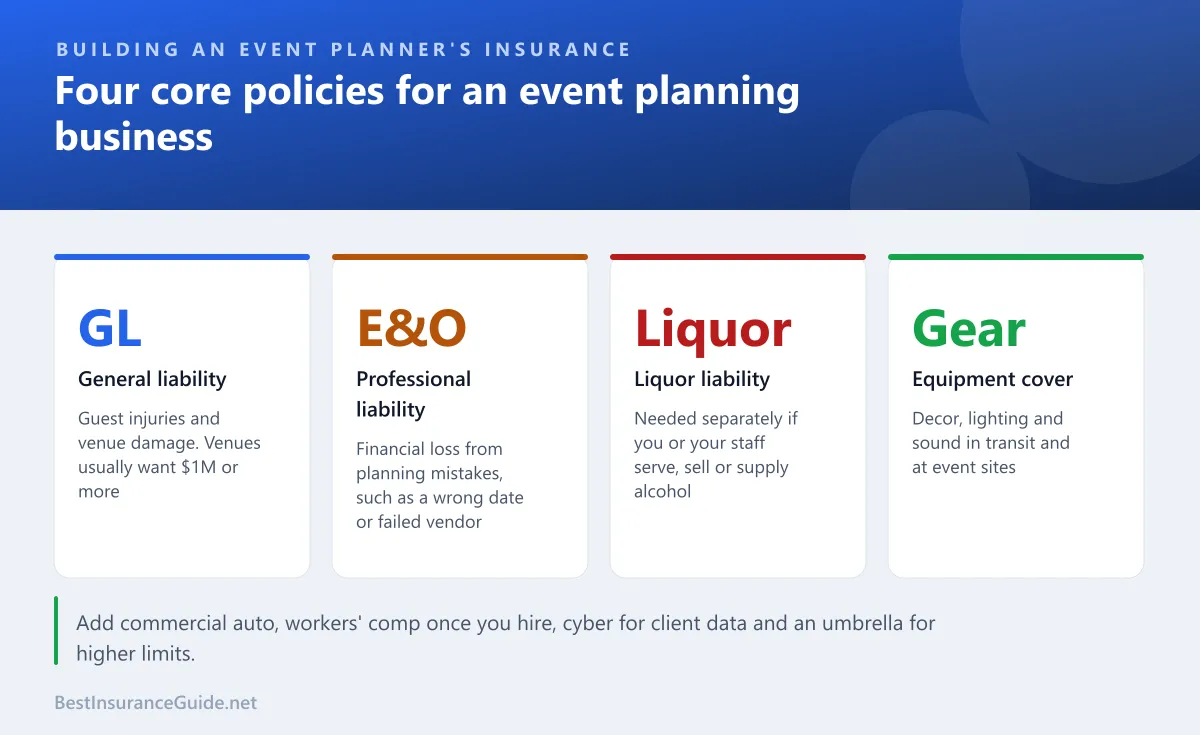
Most event planners build their coverage from four core policies, then add others depending on their work.
General liability
General liability insurance covers injuries to guests and damage to other people’s property arising from your business operations, plus legal defense costs. It is the policy venues ask for most.
Typical claims:
- a guest trips over equipment your team set up;
- a decoration you installed falls and injures someone;
- your staff damage a venue’s floor, walls or furniture during setup.
Venues commonly require at least $1 million per occurrence, and some require $2 million or more, especially for large or high-profile events.
Professional liability (errors and omissions)
General liability does not cover financial loss from mistakes in your professional services. Professional liability, also called errors and omissions, does. Examples:
- you book the venue for the wrong date and the client has to pay for a replacement at short notice;
- a vendor you selected fails to deliver and the client claims you were negligent in choosing them;
- a contract you managed contains an error that costs the client money.
For planners, this is often the claim that actually arrives. Clients who spend heavily on a wedding or corporate event are quick to look for someone to hold responsible when it goes wrong.
Liquor liability
Alcohol is part of most events, and it creates serious liability when an intoxicated guest injures someone.
- Host liquor liability covers businesses that host events where alcohol is served but are not in the business of selling or serving it. Many general liability policies include it.
- Liquor liability is a separate policy for businesses that serve, sell or furnish alcohol. If you or your staff pour drinks, or you supply the alcohol as part of your service, a general liability policy’s liquor exclusion is likely to apply.
Our guide to catering business insurance covers liquor liability in more depth, because caterers face it every week.
Equipment and property
Planners often own decorations, lighting, sound equipment, linens and signage worth thousands of dollars, most of which travels from site to site. A standard business property policy may only cover it at your premises. Inland marine or equipment floater coverage protects property in transit and at event sites.
Other policies to consider
- Commercial auto, if you or your staff drive for the business, and hired and non-owned auto coverage if staff use their own cars.
- Workers’ compensation, required in most states once you have employees.
- Cyber liability, if you store client payment details and personal information.
- An umbrella policy for higher liability limits above general liability, auto and employer’s liability. See our guide to business umbrella insurance.
Many insurers package general liability and business property into a business owner’s policy, which is often the most economical starting point for a small planning business. Our business insurance checklist lists the policies most small businesses consider.
Wedding planner insurance
Wedding planners need the same core coverage as other event planners, with a few differences worth noting.
- Emotional and financial stakes are higher, which makes professional liability claims more likely when something goes wrong.
- Weddings almost always involve alcohol, so host liquor or liquor liability matters.
- Venues are strict. Many wedding venues maintain approved vendor lists and will not allow a planner on site without a certificate of insurance.
- Destination weddings may need coverage that extends outside the US, which not every policy provides.
Wedding vendors, such as photographers, florists, DJs and caterers, typically need general liability and sometimes professional liability, and are asked for the same venue certificates.
One-day event insurance for hosts and vendors
Not everyone who needs event insurance is a professional planner. One-day event insurance, also called special event insurance, is a short-term policy for a single event.
Hosts buy it when a venue requires the person renting the space to carry liability insurance, for example for a wedding reception, milestone birthday, fundraiser, reunion or community festival.
Occasional vendors buy it when they sell or perform at markets, fairs or festivals only a few times a year and do not need an annual policy.
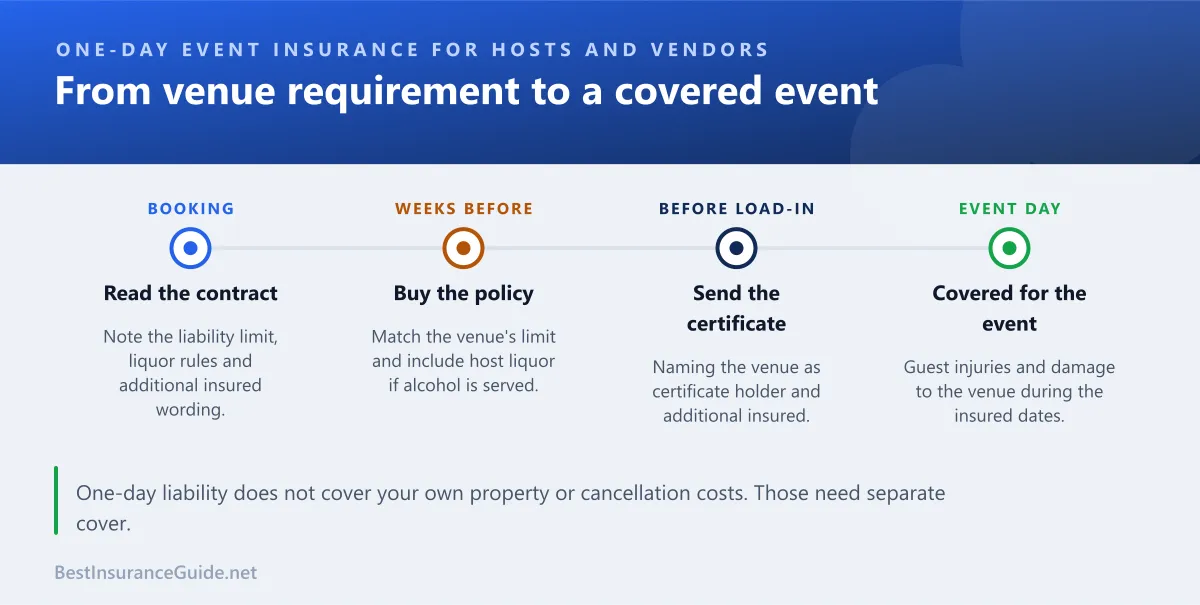
One-day policies typically cover:
- general liability for injuries to guests and damage to the venue;
- host liquor liability in many cases, with separate liquor liability available when alcohol is sold;
- damage to rented premises, for damage to the venue itself.
They usually do not cover your own property, cancellation costs or injuries to you. Many insurers let you buy one-day event liability online in minutes and issue a certificate naming the venue immediately.
Cheap one-day event insurance: what actually drives the price
One-day event liability is usually inexpensive relative to the event’s other costs, but prices vary with:
- number of guests and the type of event;
- whether alcohol is served, and whether it is sold;
- activities such as bounce houses, fireworks, live animals or sports, which some policies exclude or price separately;
- liability limit required by the venue;
- the venue and location.
The cheapest policy is not always the right one. Check that it meets the venue’s required limit, includes host liquor if alcohol will be served, and can name the venue as an additional insured.
Event liability vs event cancellation insurance
These are often confused, and many events need both.
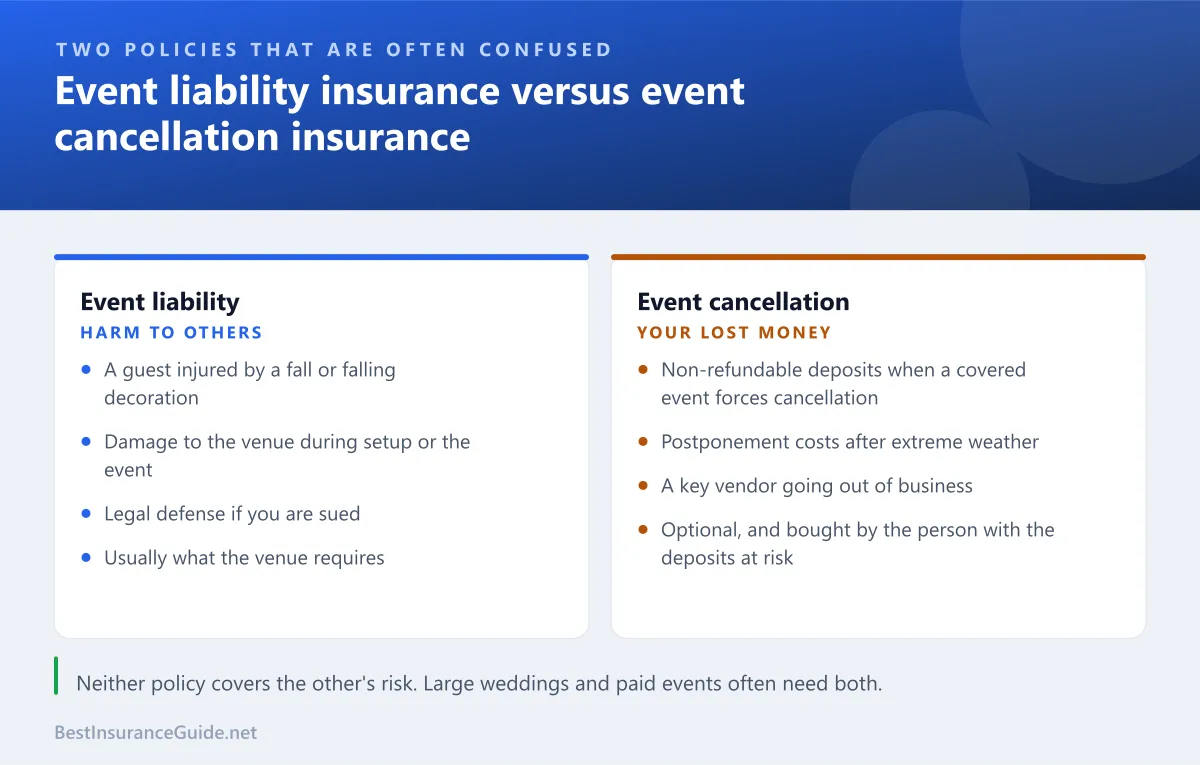
Event liability insurance pays when someone else is injured or their property is damaged because of the event.
Event cancellation insurance reimburses your non-refundable costs if the event is cancelled, postponed or disrupted for a covered reason, such as extreme weather, a vendor going out of business, or serious illness of a key person. It is commonly bought by couples for weddings and by organizers of large events with big non-refundable deposits.
Neither covers the other’s risk. A liability-only policy pays nothing when a hurricane forces a wedding to be postponed; a cancellation policy pays nothing when a guest is injured.
What venues require
Venue insurance requirements are usually written into the rental or vendor agreement. The most common are:
- General liability of $1 million per occurrence, sometimes with a $2 million aggregate.
- Liquor liability if alcohol is served or sold.
- A certificate of insurance delivered before the event. Our guide to the certificate of liability insurance explains how to request and read one.
- Additional insured status for the venue and sometimes its owner and management company, so your policy defends them if they are sued over your event. See what additional insured means.
- A waiver of subrogation in some contracts, preventing your insurer from pursuing the venue. Our guide to the waiver of subrogation explains when that matters.
Send the venue’s insurance clause to your insurer or agent before you sign, so there is time to add endorsements and issue the certificate.
Common event planner claims
A guest trips over a lighting cable at a reception. General liability pays for the guest’s medical costs and any claim, and defends the planner and, if additional insureds, the venue.
An open flame decoration scorches a ballroom’s ceiling. General liability, often under the damage to rented premises coverage, pays for the venue’s repairs.
A guest leaves a wedding intoxicated and causes a car accident. Liquor liability claims can be severe. Whether the planner, the caterer or the venue is responsible depends on who served the alcohol and state dram shop laws, which is why each party’s liquor coverage matters.
A corporate client sues over a failed product launch. The planner booked a venue that could not accommodate the agreed audio-visual setup, and the client claims lost business. Professional liability responds; general liability does not.
Equipment is stolen from a van overnight. Inland marine or equipment coverage pays for the lighting and decor, subject to the deductible and any vehicle security conditions.
Contracts: the protection that works alongside insurance
Insurance pays for losses; good contracts reduce how many you have. Planners who manage risk well pair their policies with a few contract habits.
Collect certificates from every vendor you hire. If you subcontract a caterer, DJ, florist or rental company, require them to carry their own general liability, and liquor liability where they serve alcohol, and to name you and the venue as additional insureds. Otherwise their accident can become your claim.
Include a limitation of liability clause in client contracts, where your state allows it, capping your liability for professional errors at a reasonable amount, often the fee you were paid. It does not replace professional liability insurance, but it can limit the size of a dispute.
Define what you are and are not responsible for. State clearly that vendors engaged directly by the client are the client’s responsibility, and that you are not liable for a vendor’s performance beyond reasonable care in recommending them.
Add a force majeure clause explaining what happens to fees and deposits if the event is cancelled for reasons outside anyone’s control, such as severe weather or a government order. Pair it with advice to clients about event cancellation insurance.
Put alcohol rules in writing. Specify who is serving, that licensed bartenders will be used, that identification will be checked and when service will stop. These terms help both safety and your liquor liability position.
Read the venue’s indemnity clause. Many venues require you to indemnify them for claims arising from your event, sometimes even claims partly caused by the venue. Your insurer can tell you whether your policy covers that contractual promise.
How to buy event planner insurance
- List what you do: planning only, or also decorating, coordinating on the day, supplying staff, serving alcohol or driving.
- Check your client and venue contracts for required limits and endorsements.
- Start with general liability and professional liability, often packaged together or in a business owner’s policy.
- Add liquor liability if you or your staff serve alcohol, and equipment coverage for items you transport.
- Add workers’ compensation when you hire employees.
- Ask for blanket additional insured and waiver of subrogation endorsements if you work with many venues, to avoid changing the policy for each event.
- Compare quotes from insurers or an agent who writes event businesses. Our guide to business insurance for sole proprietors covers the basics for one-person planning businesses.
The bottom line
Event planner insurance is built around two exposures: physical harm to people and property, covered by general liability, and financial harm from professional mistakes, covered by professional liability. Add liquor liability if alcohol is served by you, equipment coverage for what you carry between venues, and the endorsements venues require. Hosts and occasional vendors can use one-day event insurance for a single event, and anyone with large non-refundable costs should consider event cancellation insurance separately.
BestInsuranceGuide.net is an independent publisher and is not affiliated with any insurer or event venue. Coverage, exclusions and venue requirements vary; read your policy and venue contract carefully. Liquor liability rules vary by state.